
Overview
Jet Mills for Micronization
A jet mill is a grinding equipment used in super fine particle size reduction. It employs compressed air, gas, or steam to grind materials to a very fine consistency, often micron or even sub-micron level.
In a jet mill, particles are introduced into a high-speed stream of gas inside a grinding chamber. The kinetic energy in the stream of gas causes interparticle collision, and as the high-velocity particles hit against each other, they break apart, creating finer particles. This process of particle size reduction is known as micronization.
Core Advantages
Zero Contamination
No grinding media — milling is purely particle-on-particle. Ideal for ultra-pure APIs, battery cathode materials, and food-grade powders.
Narrow PSD
Integrated classifiers enable tight D50/D97 control. It ensures uniform particle size, consistent dosing, and superior product performance.
Low Temperature
Gas expansion causes adiabatic cooling at the nozzle. The milling zone stays near ambient temperature to prevent heat degradation.
D50<1µm
Achievable D50
0°C+
Heat-Free Process
99.9%
Media-Free Purity
Comparison
| Parameter |
Jet Mill
|
Ball Mill | Hammer Mill | Pin Mill |
|---|---|---|---|---|
| Particle Size Range | 0.5 - 45 µm | 0.5 - 100 µm | 50 - 1000 µm | 20 - 500 µm |
| Contamination Risk | None (media-free) | High (grinding media) | Medium (rotor wear) | Medium (pin wear) |
| Heat Generation | Near ambient / cooling effect | Moderate-High | High | Moderate-High |
| PSD Control | Excellent (Integrated classifier) | Moderate | Good (screen/sieve) | Moderate |
| Throughput | g/h → t/h (scalable) | kg/h → t/h | kg/h → t/h | kg/h → t/h |
| Energy Efficiency | Moderate-High | Moderate-High | Moderate | Moderate |
| GMP / CIP / SIP | Excellent | Difficult | Good | Moderate |
| Heat-Sensitive Materials | Ideal | Not suitable | Limited | Limited |
| ATEX / Inert Gas Operation | N₂ loop available | Requires modification | Complex | Complex |
| Moving Wear Parts in Mill Zone | None | Balls + liner | Hammers + liner | Pins + disc |
Best For Jet Mill
Heat-sensitive, high-purity materials; hard or brittle materials; micro/submicron ultrafine powders
Best For Ball Mill
Medium-hardness and above minerals, ores, ceramics, cement; suitable for wet or dry processing
Best For Hammer/Pin Mill
High-volume coarse milling (>50 µm), food ingredients, fibrous materials where ultra-fine PSD is not required.
Solutions
Our jet mill lineup features three different designs.
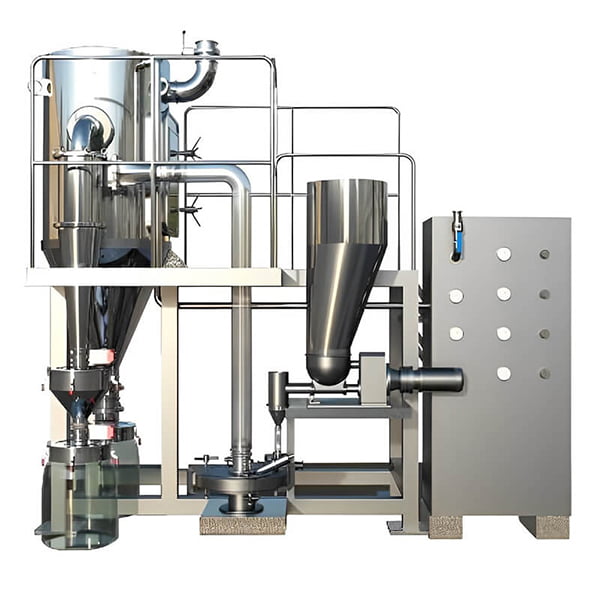
Spiral Jet Mill
A flat, disc-shaped grinding chamber with tangentially arranged nozzles creates a spiral gas vortex. Particles circulate in the outer grinding zone and migrate inward to the central outlet once sufficiently fine -- no external classifier required.
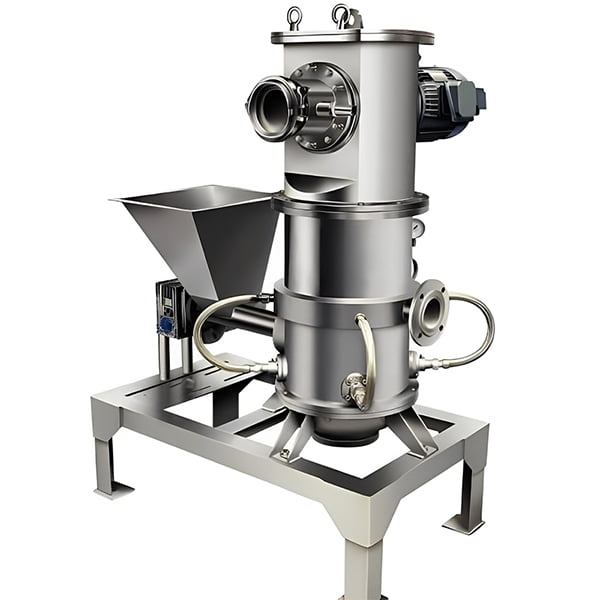
Fluidized Bed Jet Mill
Multiple horizontal nozzles create a fluidized bed of particles that collide at the convergence zone. An overhead dynamic classifier wheel independently controls cut size -- enabling precise D97 adjustment without changing gas pressure.
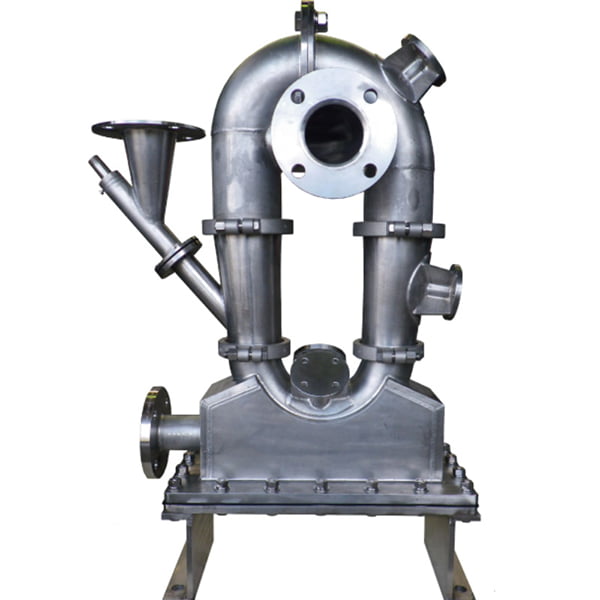
Loop Jet Mill
An oval or racetrack-shaped grinding loop where particles are accelerated and repeatedly collide along the loop path. The elongated geometry provides longer residence time and more impact events per pass.
Capacity Range
Jet Mill Solutions for Every Scale.
0.1 - 2kg/h
Feed Rate
Ideal for early-stage R&D, formulation development, and small-batch feasibility studies. Compact footprint with full-scale process fidelity — results directly transferable to pilot and production units.
2 - 50kg/h
Feed Rate
The critical bridge between laboratory validation and full-scale production. Purpose-built for process scale-up, GMP trial batches, and mid-volume specialty material processing with precise parameter control.
50 - 1000+kg/h
Feed Rate
High-throughput continuous milling for commercial-scale pharmaceutical, chemical, and advanced material production. Engineered for 24/7 operation with PLC automation, CIP/SIP capability, and full ATEX compliance.
Applications
Jet mills deliver ultra-fine grinding across the most demanding industries.
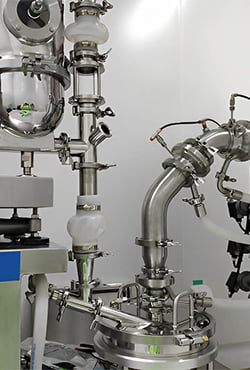
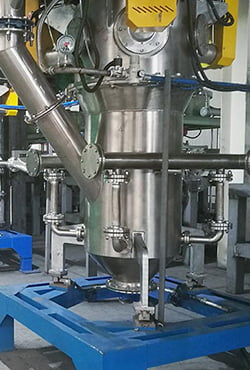
Pharma
Pharmaceutical Jet Mill
Designed for the ultra-fine grinding of APIs and excipients, enabling the production of high-purity powders with a narrow PSD. They are widely used to improve drug solubility, bioavailability, and consistency in pharmaceutical formulations.
Battery
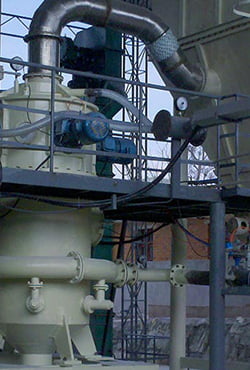
Jet Mill for Battery Material
Optimized for battery cathode (LFP, NCM, NCA) and anode (graphite, silicon) materials. Nitrogen-loop operation prevents oxidation; ceramic-lined chambers eliminate metal contamination that would compromise electrochemical performance.
Mineral
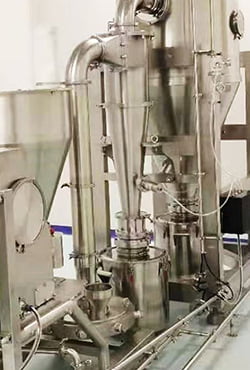
Jet Mill for Mineral
Used for the micronization of hard and abrasive mineral materials such as talc, calcium carbonate, quartz. This improves their reactivity, flowability, and surface area for applications such as fillers, coatings, and ceramics.
Chemical
Jet Mill for Chemicals
ATEX-compliant designs for explosive or flammable powders. Handles corrosive, abrasive, or high-hardness specialty chemicals. Available with Hastelloy, titanium alloy, or ceramic contact materials for stringent production requirements.
Selection guide
How to choose the right jet mill?
Work through these four steps to zero in on the jet mill configuration that fits your process. It's the same checklist our engineers run through first.
Not sure where to start? We'll figure it out with you.
Send us a 1000-gram sample and we'll run a feasibility test at no charge -- no purchase commitment required.
Request a Material TestKnow Your Material
You need to determine the initial particle size and the target particle size of the material. Understanding your material's physical and chemical behavior is the foundation of jet mill selection.
Oxidation-prone
→ Requires a fully enclosed system design to prevent outside air from entering.
Sticky / oily
→ Anti-adhesion surface treatment and flow facilitating prevent buildup and ensure consistent yield.
High hardness (Mohs > 5)
→ Jet mills with ceramic nozzles and wear-resistant liners for hard material grinding.
High size consistency
→ High-speed dynamic classifier on fluidized bed model; ideal for tight particle size distribution.
Match the Mill to Your Throughput
Scale selection impacts both capital cost and operational flexibility.
Grams - 2 kg/h
Lab Scale
R&D, small batches of high-value materials
2 - 50 kg/h
Pilot Scale
Process validation, scale-up trials, clinical batch production
> 50 kg/h
Production Scale
Full-scale commercial manufacturing
How Clean Does Your Product Need to Be?
Can you tolerate any trace metal contamination? Do you need to meet GMP, CIP, or SIP requirements? The answers determine both the material selection and the system's design complexity — so it's worth being specific early.
Zero metal contamination (electrode materials, advanced alumina): Ceramic-lined chamber or all-ceramic coated parts. Available on both spiral and fluidized bed models to fully eliminate metallic wear particles.
GMP pharmaceutical manufacturing: CIP/SIP capability, 316L stainless steel construction, Ra ≤ 0.4 µm surface finish, full IQ/OQ/PQ documentation package, and 21 CFR Part 11 data integrity support.
Food-grade / general industrial: Food-contact compliant materials, easy-access cleanout doors, and smooth interior welds. Hygienic design minimizes cross-contamination risk between product changeovers.
How to Integrate your Existing Equipment?
Define the system boundary to determine whether you need a standalone unit or a complete line.
Standalone Unit
- --Plug-and-play electrical & pneumatic connections
- --Compact footprint, minimal works
- --FAT & SAT documentation included
Full Turnkey Line
- --Process design & P&ID development
- --Guaranteed overall performance
- --On-site commissioning & training
Retrofit & Integration
- --Tailored interface engineering
- --Swift installation with carefully planned cutover
- --Step‑by‑step upgrade
FAQ
Answers to the most common technical and commercial questions from procurement managers and process engineers evaluating jet mills.
Still have questions?
Our engineers are available for a 30-minute technical consultation.
Book a ConsultationHow is the particle size controlled and adjusted?
Particle size in a jet mill is primarily controlled by the following parameters.
- Grinding pressure – higher pressure increases particle collision energy, producing finer and more uniform grinding. Lower pressure results in coarser output.
- Feed rate – overfeeding reduces residence time and coarsens the product.
- Classifier speed (fluidized bed type) – increasing the speed increases the centrifugal force, so only smaller particles can pass through to the outlet.
What is the recovery rate of a jet mill?
Under normal operating conditions, the recovery rate typically ranges from 95% to 99%, depending on the material characteristics and processing requirements.
What utilities and auxiliary equipment are required?
Particle size in a jet mill is primarily controlled by the following parameters.
- Compressed air supply – clean, dry compressed air at the specified pressure and flow rate.
- Feeding system – a screw feeder, vibrating feeder or rotary valve to convey material at a controlled rate.
- Product collection – cyclone separator and/or filter collector with discharge valve.
What maintenance does a jet mill require?
Jet mills are designed for low maintenance due to the absence of moving grinding parts. Routine maintenance typically covers:
- Daily checks – Inspect compressed air pressure and quality, verify classifier speed and feed rate are within set parameters.
- Periodic inspection – Check seals and gaskets for integrity. Examine wear liners, nozzles and classifier rotor for signs of wear.
- Filter maintenance – Clean or replace filter bags/cartridges on a schedule based on material loading.
Do you offer material testing before purchase?
Yes. We strongly recommend material testing before any purchase decision. Our testing service includes:
- Lab-scale test – a grinding trial on our lab jet mill using your sample, generating a test report including PSD data, throughput figures and recommended parameters.
- Pilot-scale trial – for complex applications, we can run extended trials to validate scale-up performance.
What after-sales support and spare parts service do you provide?
We are committed to supporting your operation well beyond initial commissioning:
- Spare parts – critical wear parts (nozzles, liners, seals) are held in stock for fast dispatch.
- Remote support – our engineers are available by phone, email or video call to help with troubleshooting.
- On-site service – scheduled visits or emergency call-out service available.
- Training – safe operation, parameter adjustment and routine maintenance.
Related Equipment
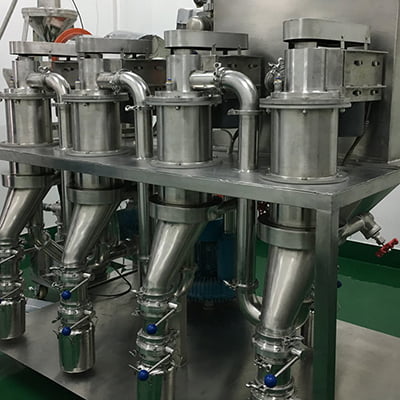
Air Classifier
Separates fine and coarse particles using controlled airflow; provides sharp cuts and precise particle size distribution.
Learn More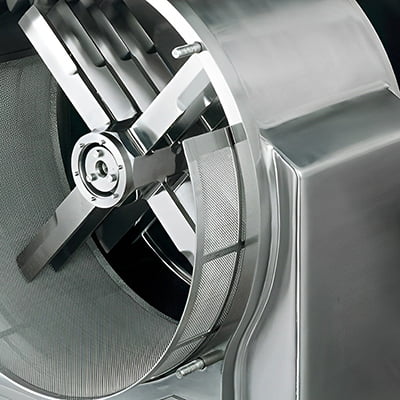
Hammer Mill
Reduces material size by high-speed rotating hammers, suitable for medium grinding of various brittle materials.
Learn More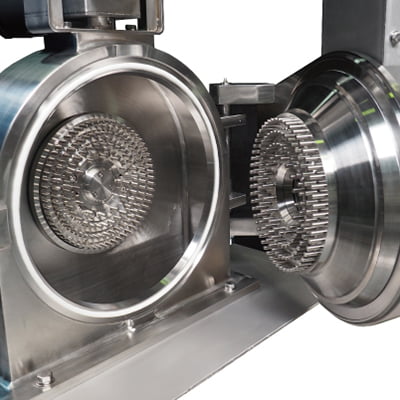
Pin Mill
Utilizes high-speed pin discs for fine grinding, providing uniform particle size distribution for dry, friable materials.
Learn More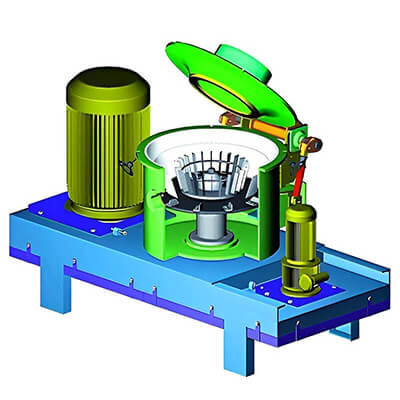
Air Classifier Mill
Combines grinding and classification in one unit; internal classifier instantly extracts fines for consistent, efficient output.
Learn More