
Overview
Laboratory Glove Box
A laboratory glove box is a hermetically sealed, controlled environment chamber designed to protect either a sensitive product from the external atmosphere, or a human operator from hazardous materials.
Equipped with built-in, arm-length gloves, it allows operators to perform physical and chemical manipulations inside the chamber without breaking the airtight seal.
Core Advantages
Physical Protection
Through physical barriers and pressure control, it prevents the leakage of toxic or hazardous substances while also blocking external contaminants from entering.
Atmosphere Control
It achieves extremely low moisture and oxygen levels and continuously circulates and purifies inert gas.
0.1ppm
O₂/H₂O Residual
0.05vol%/h
Leak Rate
±1°C
Temp Control
Principle
Under the control and monitoring of the PLC, the gas circulates in a closed loop through pipelines and a circulation fan, continuously purifying the atmosphere inside the chamber to maintain an inert environment with low oxygen and low moisture levels.
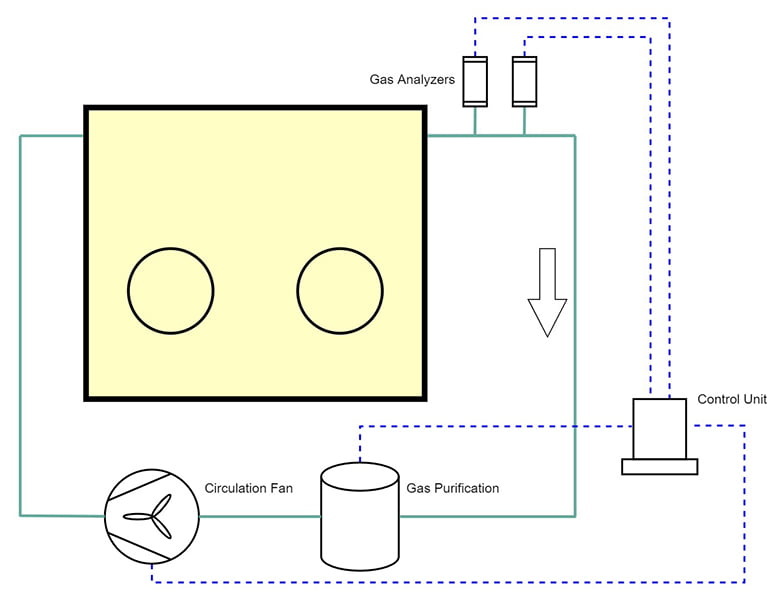
Schematic diagram of a glove box
Structural Components
Main Chamber Body
Stainless steel or polycarbonate construction. Fully welded, pressure-tested seams. Available in single or multi-station configurations.
Glove Ports & Gloves
Butyl rubber or Neoprene gloves mounted on airtight flanged ports. Replaceable under working conditions with anti-static options for explosive powders.
Viewing Window
A large transparent window, usually made of laminated glass or polycarbonate, integrated into the main chamber.
Antechamber
A smaller compartment attached to the main chamber, used for transferring materials or instruments in and out of the glove box without compromising the controlled atmosphere.
Gas Purification & Recirculation
Closed-loop molecular sieve columns and catalytic purifiers continuously remove O₂ and H₂O. Automatic regeneration cycles maintain target atmosphere levels.
Pressure & Control System
PLC-based monitoring with digital pressure regulation, O₂/H₂O sensors, and alarm outputs. Integrates with facility SCADA or standalone HMI touchscreen.
Solutions
Each variant shares the same hermetic enclosure architecture. Select by pressure requirement, working volume, material compatibility, and production scale.
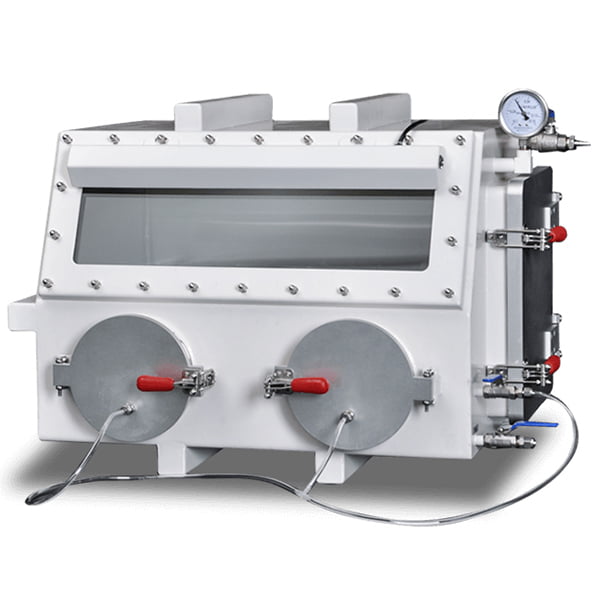
Vacuum Glove Box
A specialized enclosure in which the main chamber itself is designed to withstand external atmospheric pressure when evacuated.
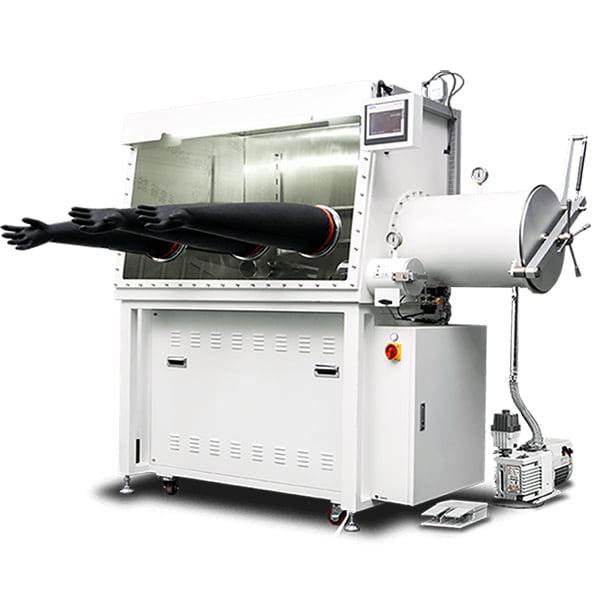
Inert Atmosphere Glove Box
A sealed enclosure that maintains a controlled atmosphere, typically filled with high-purity argon or nitrogen.
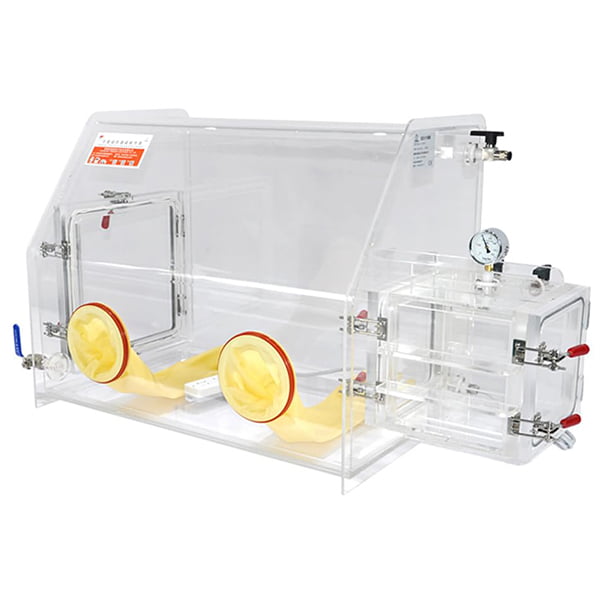
Acrylic Glove Box
Made of clear, durable acrylic panels, it offers full visibility of the work area for low-to-moderate purity applications.
Features
Airtight Seal
The system is completely airtight, ensuring that the internal atmosphere remains isolated from the external environment.
Pressure Control
It maintains a controlled positive or negative pressure relative to the ambient environment to prevent air ingress and gas leakage.
Viewing Window
A large, transparent viewing window provides excellent visibility for precise handling.
Durable Construction
Typically manufactured from high-quality stainless steel with corrosion-resistant materials for long life.
Customizable Size
Dimensions, chamber layout, and workstation configuration can be tailored to accommodate specific process requirements.
Real-Time Monitoring
Integrated sensors continuously track oxygen concentration, moisture level, pressure, and temperature.
Applications
Matched to Your Industry's Critical Challenges.
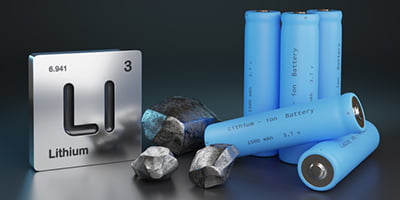
Anode/Cathode Processing
Processing these advanced materials requires a strictly controlled inert atmosphere (typically high-purity argon or nitrogen).

Metal Powder Handling
Managing reactive metal powders used in 3D printing to prevent dust explosions and oxidation, which lowers part quality.

Organometallic Synthesis
A glove box functions as a "mini cleanroom with no air", enabling safe, reproducible handling of substances.
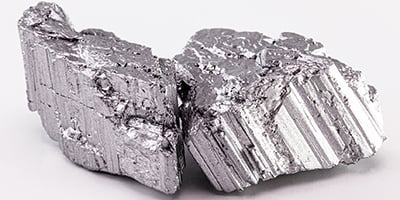
Rare Earth Processing
Rare earth alloys are highly susceptible to oxidation and hydride formation. Glove boxes provide an compliance framework.
FAQ
Answers to the most common technical and commercial questions from procurement managers and process engineers evaluating glove boxes.
Still have questions?
Our engineers are available for a 30-minute technical consultation.
Book a ConsultationWhat oxygen and moisture levels can a glove box typically achieve?
How does a glove box maintain a low oxygen and moisture environment?
How can I verify that the atmosphere inside the glove box meets requirements?
Common methods:
- Check the readings on the oxygen and moisture analyzers mounted on the box.
- Perform a "lithium test": place a freshly polished piece of lithium metal inside; if it remains bright for 30 seconds, the atmosphere is good.
Can the glove box be integrated with upstream or downstream equipment?
What parameters should I consider when purchasing a glove box?
When selecting a glove box, consider these key parameters:
- Atmosphere Performance – Type of gas purification system and purification capability.
- Pressure Control – You must choose between protecting the product or protecting the operator.
- Glove Box Size – Single workstation or multi-workstation.
- Antechamber Specifications – The inner dimensions of the main antechamber must accommodate your largest piece of equipment, or material batches.
Related Equipment
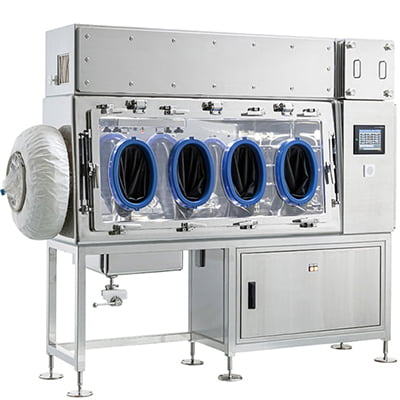
Containment Isolator
Encloses hazardous substances to prevent operator exposure; ensures safe handling of potent compounds.
Learn More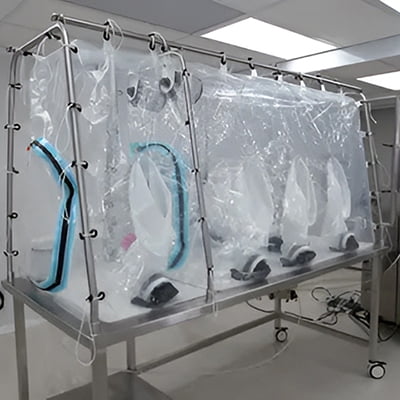
Flexible Isolator
Offers cost-effective containment for powder handling with a lightweight, flexible design suitable for diverse tasks.
Learn More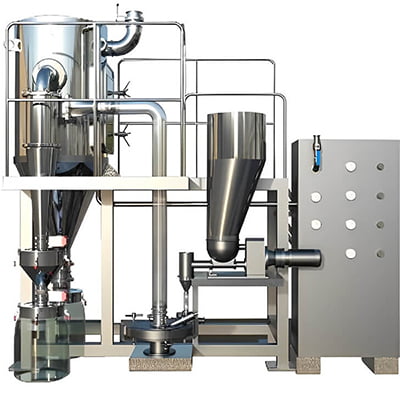
Jet Mill
Uses compressed air to achieve ultra-fine grinding without heat, ideal for heat-sensitive and high-purity materials.
Learn More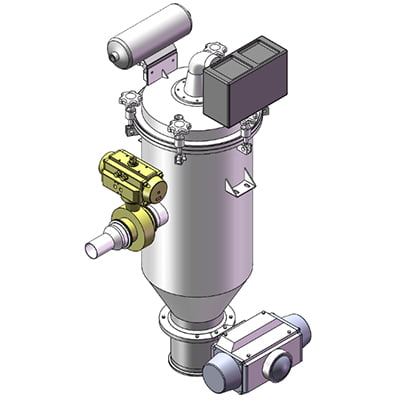
Vacuum Loader
Transfer powders and granules efficiently using vacuum suction, ensuring dust-free conveying.
Learn More