
Overview
Loop Jet Mill
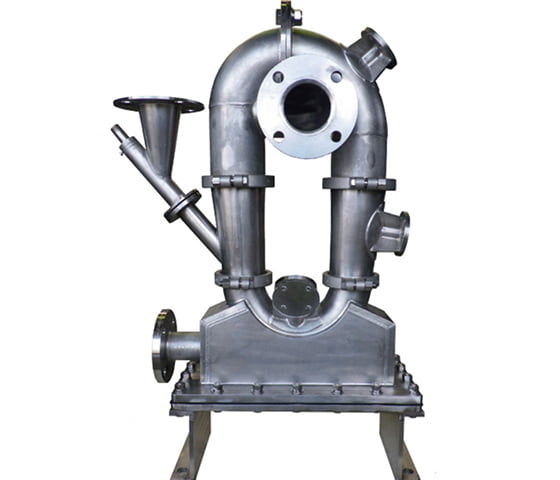
The loop jet mill is designed with an inverted trapezoidal shape, which forces the circulating particles to concentrate at the nozzles. These rapidly moving particles collide and rub against each other, breaking down into very fine particles. A high-speed gas stream drives the powder through an O-shaped grinding loop, creating intense particle-to-particle impacts.
This self-grinding mechanism ensures minimal contamination and low wear. An integral centrifugal classifier built into the loop retains coarse particles for further grinding while discharging fine product, eliminating the need for a separate classifier.
D97<5μm
Fineness Range
±5%
PSD Consistency
3t/h+
Capacity
Principle
Continuous Loop Grinding, Narrow Particle Distribution.
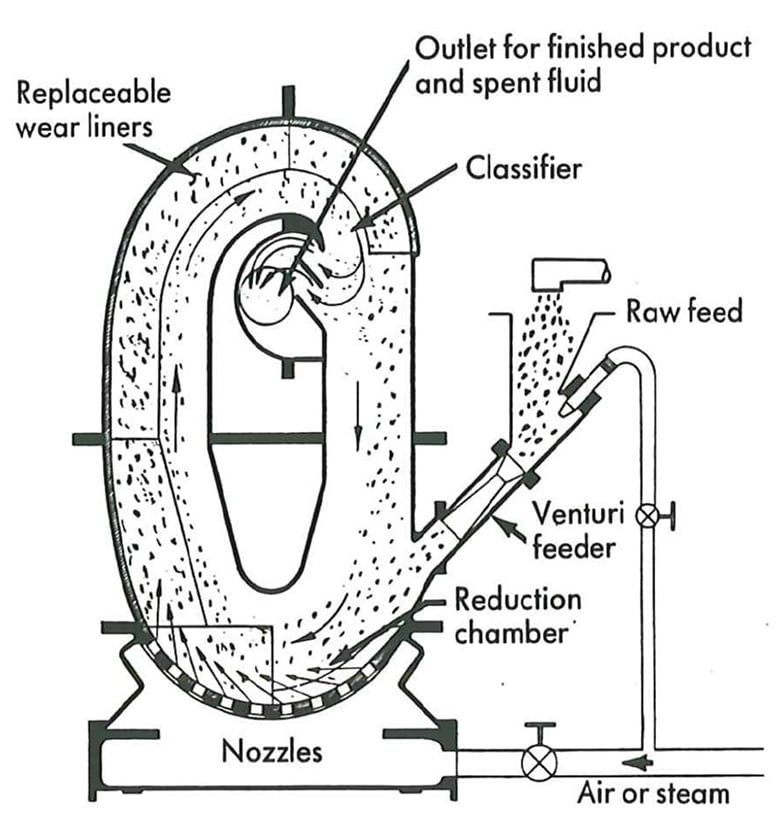
Loop Jet Mill diagram
Material Feeding
The raw material is consistently fed into the system via a quantitative feeder. This solid-gas mixture passes through a venturi nozzle, which creates a vacuum effect to inject the material efficiently into the grinding chamber.
Impact & Comminuition
Once inside the grinding zone, the particles are accelerated to ultrasonic speeds by multiple grinding nozzles positioned at specific angles. The intense kinetic energy causes the particles to collide with one another and undergo high-speed friction, resulting in ultra-fine comminution.
Centrifugal Classification
The ground powder rises to the classification zone at the top of the mill. The airflow carries the fine particles toward the internal discharge outlet.
Coarse Particle Recirculation
Particles that are still too coarse are pushed toward the outer wall of the classification zone by centrifugal force. These coarse particles are automatically redirected back down the return pipe to the grinding zone for a secondary round of grinding, ensuring a narrow particle size distribution.
Features
Internal flow dynamics
Narrow PSD
The mill prevents material from remaining in the grinding chamber longer than necessary. This eliminates over-grinding and results in a highly uniform product with a narrow particle size distribution.
Cool Grinding
The rapid expansion of the high-pressure fluid as it exits the nozzles causes a significant drop in temperature. This cooling action allows for the safe processing of heat-sensitive materials without the risk of thermal degradation.
Reduced Material Buildup
Designed with optimized internal flow dynamics, the mill maintains relatively moderate flow velocities. This makes it effective at handling adhesive or sticky powders, reducing material buildup on the internal walls and ensuring stable, continuous operation.
Applications
Applicable to demanding production environments.
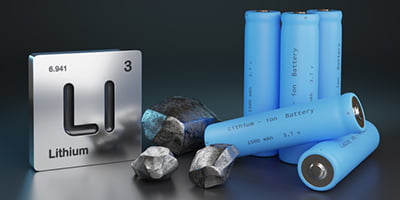
Cathode & Anode
Ultra-fine milling of LFP, NCM, NCA, and graphite under inert N₂ atmosphere to prevent oxidation, ensuring electrochemical performance and consistent D50 for electrode coating uniformity.

Additives & Flavors
Low‑melting‑point or sticky materials are processed effectively thanks to the low-temperature grinding and moderate internal gas velocity, which preserve volatile aromas and prevent gumming.
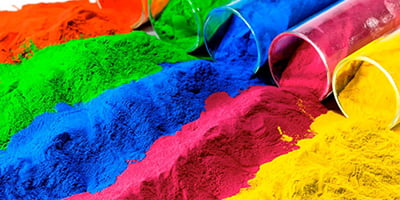
Inks & Pigments
The self-grinding action and absence of moving wear parts prevent metallic contamination, crucial for high-purity pigments and specialty chemicals.
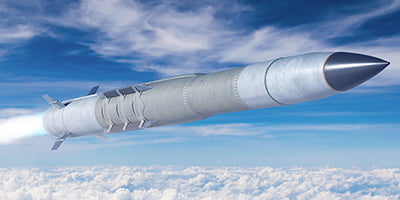
Reactive Materials
It can be safely operated with inert gas for reactive or explosive materials such as energetic chemicals, metal powders. The fully sealed system prevents oxygen ingress and dust leakage.
Related Equipment
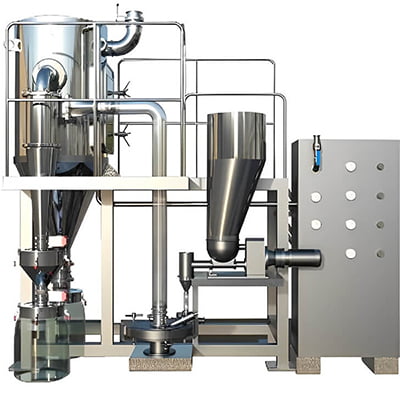
Spiral Jet Mill
A flat, disc-shaped grinding chamber with tangentially arranged nozzles creates a spiral gas vortex.
Learn More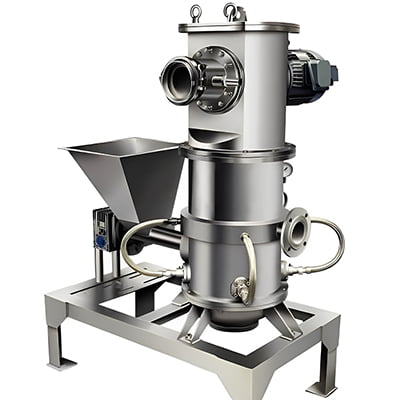
Fluidized Bed Jet Mill
Multiple horizontal nozzles create a fluidized bed of particles that collide at the convergence zone.
Learn More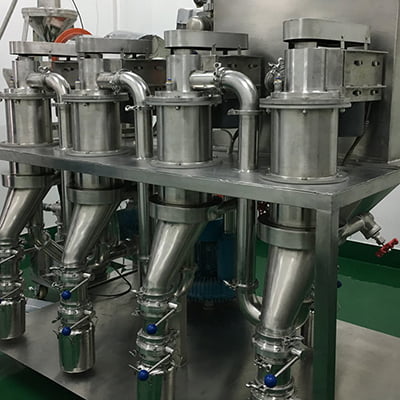
Air Classifier
Separates fine and coarse particles using controlled airflow; provides sharp cuts and precise particle size distribution.
Learn More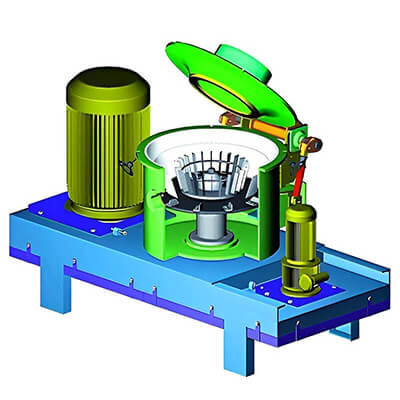
Air Classifier Mill
Combines grinding and classification in one unit; internal classifier instantly extracts fines for consistent, efficient output.
Learn More