
Overview
Industrial Jet Mill
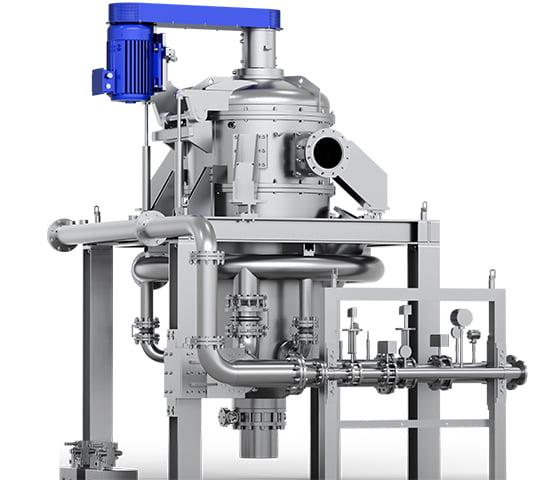
An industrial jet mill is a type of fluid energy mill used for ultra-fine grinding of dry powders in large-scale production. It utilizes high-speed gas streams, typically compressed air or inert gases, to achieve particle size reduction without mechanical grinding media.
Compared with small-scale jet mills, industrial jet mills are specifically engineered for high throughput, stable operation, and long-term continuous production. Additionally, they can be integrated with automated controls and closed-loop systems for safe operation with hazardous or toxic materials.
<1.5
Low Span Value
2t/h+
High Capacity
0°C
Temperature Rise
Features
High-capacity, continuous, and production-ready for large-scale manufacturing.
High Production Capacity
Designed for industrial-scale continuous operation, capable of processing large quantities of raw materials while maintaining stable product quality.
Continuous Operation
Integrated feeding, grinding, classification, and collection systems enable automated production with minimal manual intervention.
Precise Particle Size Control
By adjusting key parameters such as classifier speed, grinding pressure, and feed rate, the system can accurately control the particle size distribution.
Specification
| Model | Chamber Ø (mm) | Capacity (kg/hr) | Air Consumption (m³/min) | Working Pressure (MPa) |
|---|---|---|---|---|
| AS650 | 650 | 50 - 600 | 20.0 - 27.0 | 0.8 - 1.2 |
| AS1000 | 1000 | 500 - 2000 | 40.0 - 50.0 | 0.8 - 1.2 |
| LHC450 | 450 | 50 - 500 | 20.0 - 23.0 | 0.8 - 1.2 |
| LHC600 | 600 | 300 - 1500 | 35.0 - 40.0 | 0.8 - 1.2 |
* Capacity values are indicative and depend on material properties, target fineness, and operating pressure.
** The specific feed size depends on the chamber size and material hardness.
General Parameters
- Achievable D97 < 2 - 10 μm
- Feed Particle Size (max) ≤ 3 mm
- Chamber Temperature 10 - 20 °C
- Surface Finish (Ra) ≤ 0.4 μm
- Gas Type Air / N₂ / Ar
- Certifications CE / ATEX
Download Full Technical Datasheet
Get the complete specifications, and performance data in one document. PDF · ~2MB
Applications
Designed for large-scale production with precise particle size control.
Cathode & Anode
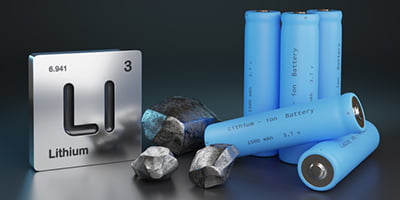
Large-scale production of cathode active materials like LFP and NCM as well as silicon-carbon anodes and solid-state electrolyte powders.
Mineral Pigments
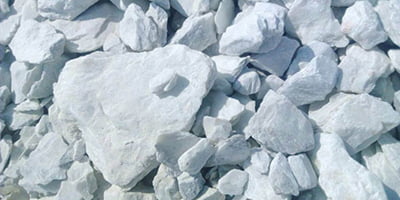
Non-metallic minerals are ground to D90 < 10 µm or even submicron levels, allowing them to serve as fillers, pigment extenders, and functional additives.

Pesticides
Used for micro-milling of active ingredients (e.g., herbicides, insecticides, fungicides) to produce wettable powders, water-dispersible granules.
Advanced Ceramics
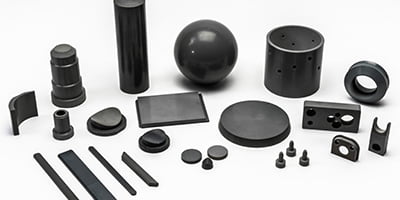
Used to prepare ultra-fine, high-purity ceramic powders, such as alumina, silicon carbide, and silicon nitride, with a narrow particle size distribution.
Available Options
Engineered for processing combustible powders. Certified enclosures, grounding systems, and pressure relief venting eliminate ignition risk in hazardous zones.
Designed for the safe, oxidation‑free, and regulatory‑compliant powder processing of high‑purity and reactive materials.
High-alumina ceramic or tungsten carbide liners extend service life when processing abrasive minerals, battery cathode materials, or hard silica compounds above Mohs 5.
Integrated laser diffraction probe delivers continuous particle size feedback to the PLC, enabling closed-loop classifier adjustment and eliminating off-spec batch risk.
FAQ
Answers to the most common technical and commercial questions from procurement managers and process engineers evaluating industrial jet mills.
Still have questions?
Our engineers are available for a 30-minute technical consultation.
Book a ConsultationWhich type of jet mill is more suitable for large-scale production?
It depends on your specific requirements.
Both spiral jet mills and fluidized bed opposed jet mills can be used for large-scale production. However, if you are processing a single product and require a narrow particle size distribution, the latter is the better choice.
Can a jet mill be connected with a classifier for continuous production?
Yes. There are two common configurations.
- Built-in classifier – The classifier wheel is integrated inside the grinding chamber. This creates a compact, closed-loop continuous process.
- External classifier – A separate classifier is placed downstream of the mill. This setup allows multi-stage classification, narrower size distributions, or multiple product fractions.
What are the operating costs for an industrial jet mill?
Do you provide on-site installation for large-scale jet mills?
How much does a large-scale jet mill cost?
The price of a large-scale jet mill varies widely, depending on several key factors:
- Capacity & throughput – Higher output models cost more.
- Automation level – PLC, HMI, and remote monitoring options.
- Customization – Integration with existing equipment, explosion-proof design, inert gas loops, etc.
Related Equipment
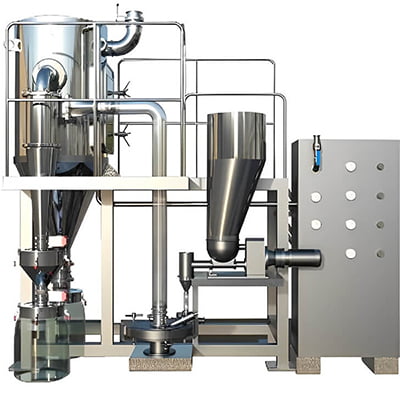
Spiral Jet Mill
A flat, disc-shaped grinding chamber with tangentially arranged nozzles creates a spiral gas vortex.
Learn More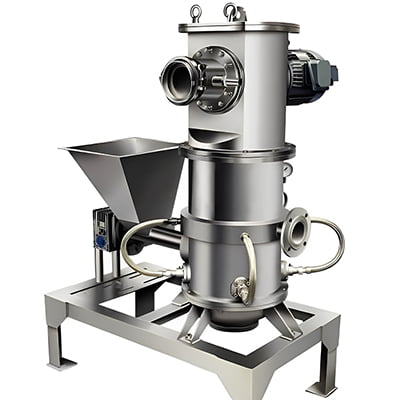
Fluidized bed Jet Mill
Multiple horizontal nozzles create a fluidized bed of particles that collide at the convergence zone.
Learn More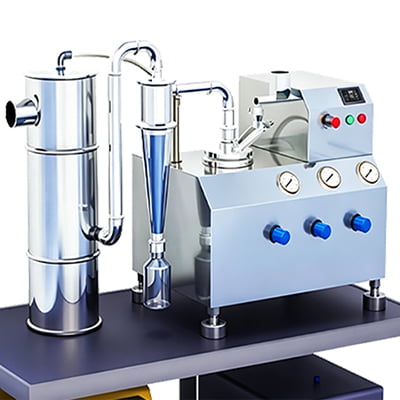
Laboratory Jet Mill
Ideal for early-stage R&D, formulation development, and small-batch feasibility studies.
Learn More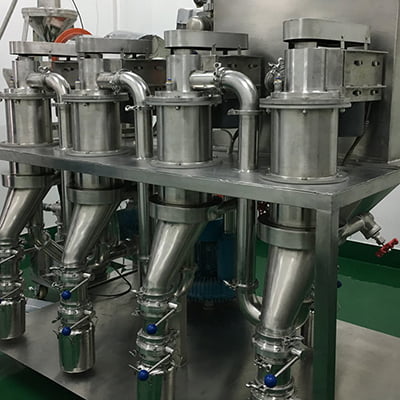
Air Classifier
Separates fine and coarse particles using controlled airflow; provides sharp cuts and precise particle size distribution.
Learn More