
Overview
Spray Dryer
A spray dryer is an industrial drying system used to convert a liquid feed into a dry powder in one continuous process. The feed can be a solution, suspension, slurry, or emulsion.
Spray drying technology is essential because it combines rapid drying, powder property control, product stability. It is a key technology for transforming liquid formulations into high-quality powders used in many modern manufacturing processes.
Core Advantages
Rapid Drying
The ultra-short drying time of only a few seconds minimizes thermal degradation and preserves product quality.
Controllable Particle Properties
You can control particle size, bulk density, morphology by adjusting parameters such as feed concentration, atomization pressure, and air flow rate.
One-step Formation
Spray drying combines drying and powder formation in a single process. It can reduce the need for additional operations such as grinding, crystallization, or filtration.
5-300µm
Particle Size Range
<3%
Residual Moisture
≥95%
Product Yield Rate
Principle
Continuous atomization-evaporation-separation process converting liquid feed into free-flowing powder.
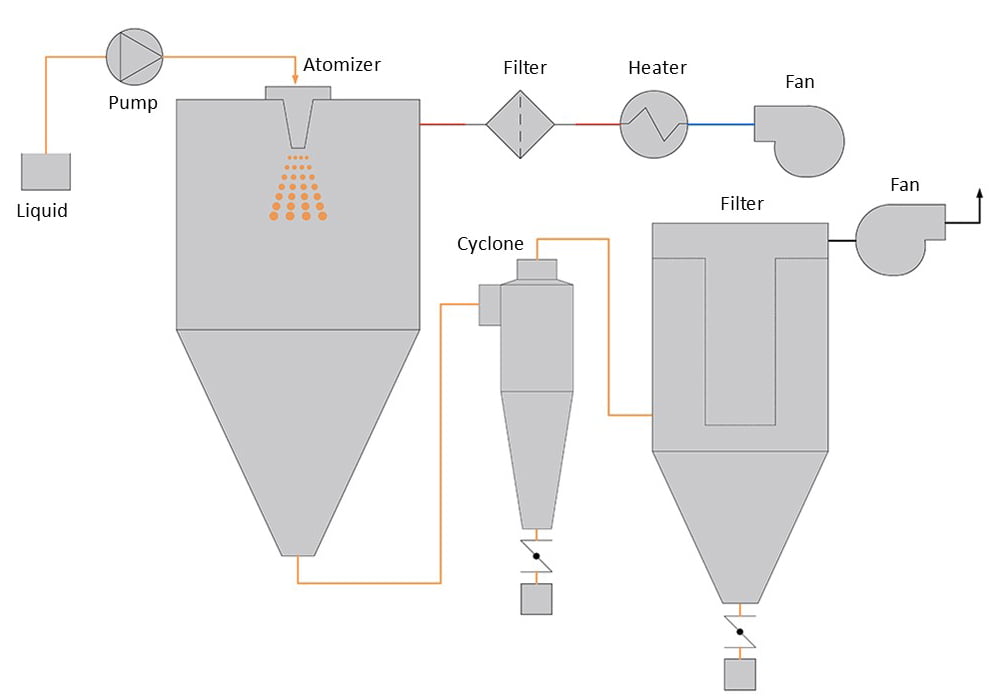
Schematic Diagram of Spray drying
Atomization
The liquid feed (which can be a solution, suspension, or emulsion) is pumped into the atomizer. The atomizer breaks the liquid into millions of microscopic droplets, drastically increasing its surface area.
Evaporation
Hot air contacts atomized droplets. Moisture evaporates almost instantly (usually within seconds). As the water or solvent evaporates, the droplet cools down, which protects heat-sensitive materials from heat damage.
Particle Formation
Dried particles settle to the cone base. Morphology and bulk density controlled by feed concentration, atomizer type, and air temperature profile.
Separation & Collection
The moisture-laden air, along with finer particles, is pulled into a cyclone separator or a bag filter, which separates the final powder from the exhaust air.
Atomization
Select the atomization mechanism that matches your feed properties, required particle morphology, and throughput.
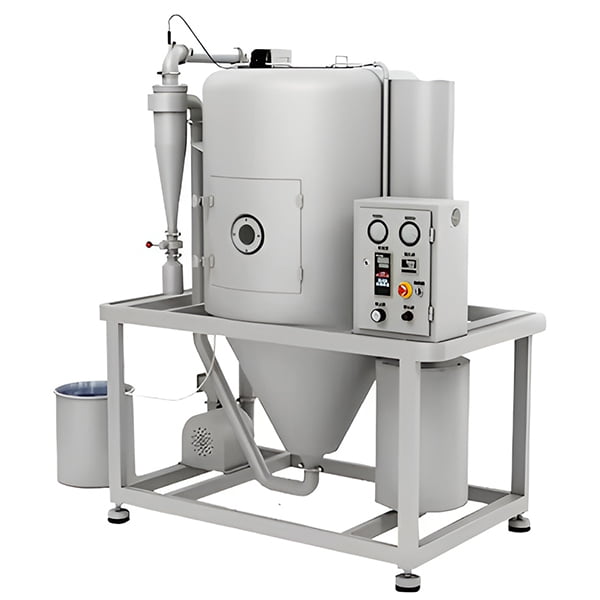
Rotary Atomizer Spray Dryer
High-speed rotating disc atomizes feed into fine droplets. Ideal for slurries, pastes, and heat-sensitive materials.
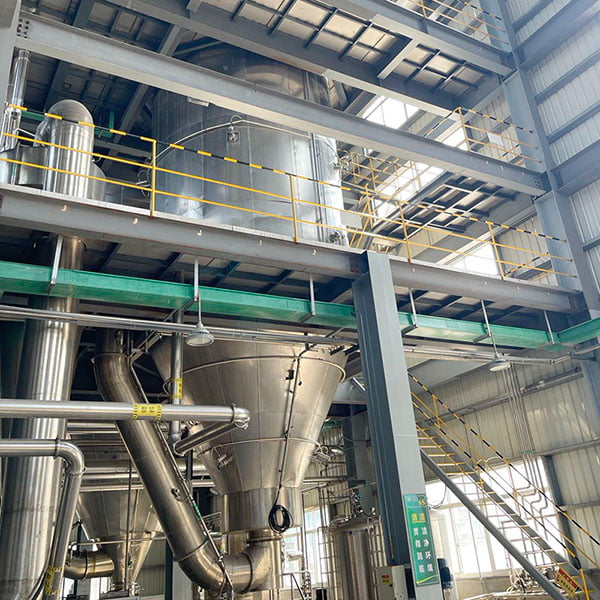
Pressure Spray Dryer
High-pressure pump forces feed through a single-fluid nozzle. It produces coarser, denser particles.
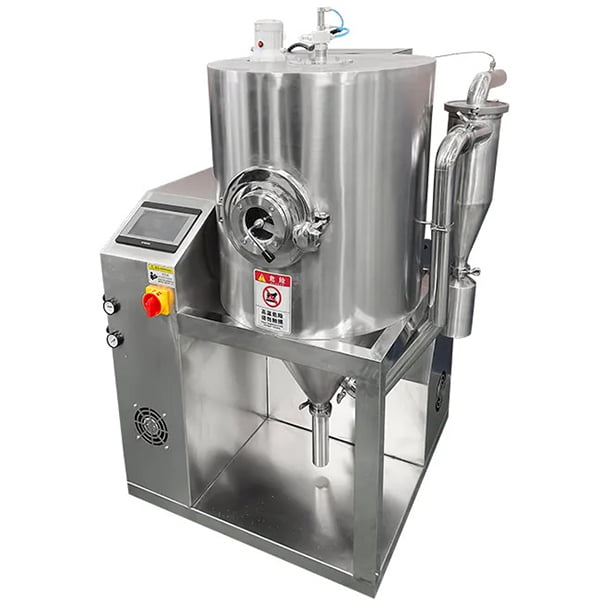
Two Fluid Nozzle Spray Dryer
It utilizes compressed gas and liquid feed to produce fine, uniform droplets for efficient spray drying.
Technology Comparison
| Parameter | ● Centrifugal | ● Pressure | ● Pneumatic |
|---|---|---|---|
| Atomization Method | High-speed rotating disc | High-pressure mechanical nozzle | Compressed air + two-fluid nozzle |
| Formed Particle Size |
20 - 250 μm
Medium, uniform spherical |
50 - 350 μm
Coarse, dense granules |
10 - 100 μm
Fine to ultra-fine powder |
| Production Scale | Pilot to large-scale industrial (kg/h - t/h) | Medium to large industrial (t/h) | Lab / pilot scale (g/h - kg/h) |
| Feed Viscosity | Wide range | Low to medium viscosity | Low to medium viscosity |
| Energy Consumption | Moderate | Relatively low atomization energy | Higher due to Comp. air consumption |
Capacity Range
Select the configuration that matches your throughput requirements and scale-up roadmap.
Lab Spray Dryer
0.5-5
L/h Evaporation Capacity
- Feed rate: 0.1 - 5 L/h
- Inlet temperature: up to 220 °C
- Atomizer: Two-fluid nozzle & mini centrifugal
- Recovery Rate: 50% - 80%
- Investment: Low
Pilot Spray Dryer
5-20
L/h Evaporation Capacity
- Feed rate: 5 - 30 L/h
- Inlet temperature: up to 250 °C
- Atomizer: All Types
- Recovery Rate: 70% - 90%
- Investment: Medium
Industrial Spray Dryer
20-2000+
L/h Evaporation Capacity
- Feed rate: 30 - 2000+ L/h
- Inlet temperature: up to 350 °C
- Atomizer: Centrifugal & pressure nozzle
- Recovery Rate: 90% - 98%
- Investment: High
Applications
Each industry demands distinct process parameters, material handling standards, and regulatory compliance. Our spray dryer configurations are engineered to match.
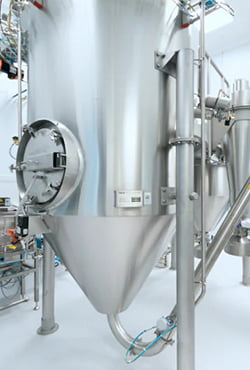
Pharma
Pharmaceutical Spray Dryer
Engineered for APIs, liposomes and solid dispersions. Fully GMP-compliant with CIP/SIP capability, 316L stainless steel contact parts, and validated control systems for FDA submissions.
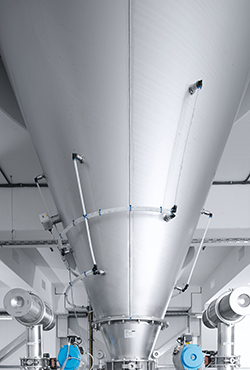
Food Industry
Food Spray Dryer
High-throughput systems for dairy, infant formula, flavors, and food additives. Optimized for heat-sensitive nutrients, fat-containing feeds, and hygroscopic powders with superior solubility.
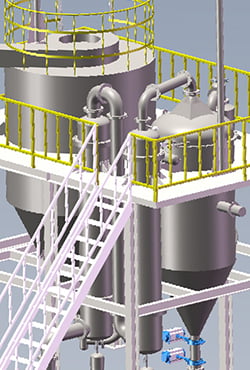
Ceramics
Ceramic Spray Dryer
Robust systems for alumina, zirconia, silicon carbide, and advanced technical ceramics. Wear-resistant lining options, high-temperature capability, and precise granule morphology control for pressing.
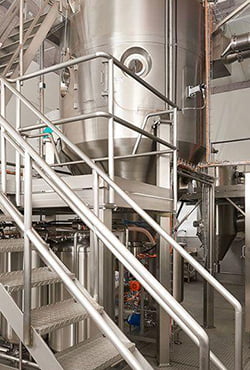
Chemical Industry
Chemical Spray Dryer
Versatile configurations for detergents, catalysts, dyes, and specialty chemicals. ATEX-certified explosion-proof designs for flammable solvents, with corrosion-resistant alloy options.
How to Choose the Right Spray Dryer? Work through these four steps to identify the spray dryer configuration.
Not sure where to start? We'll figure it out with you.
Send us your feed liquid data sheet and we'll run a feasibility assessment at no charge — no purchase commitment required.
Request a Feed TrialDefine Your Material Characteristics
Most CriticalThe physical and chemical properties of your feed are the single most decisive input for spray dryer selection. Characterize these before evaluating any other parameter -- they determine atomizer type, drying atmosphere, chamber geometry, and safety system requirements.
Heat-Sensitive Materials
Choose a spray dryer with tightly controlled outlet temperature. Consider freeze spray drying if extreme heat sensitivity.
High-Viscosity, Sticky, or High-Solids Slurry
High-viscosity feeds risk nozzle clogging with pressure or two-fluid atomizers. Rotary (centrifugal) atomizers handle viscous feeds continuously without clogging.
Organic Solvent-Based Feeds or Explosive Dust Risk
Use a closed-loop spray dryer with inert gas circulation to eliminate oxygen. Equip with explosion-proof components and pressure relief vents. Include solvent recovery system to economically reclaim solvents.
Select Atomizer Type
Atomizer selection is the primary lever controlling outlet particle size distribution (PSD), morphology, and bulk density. Match atomizer type to your D50 specification and feed properties before sizing the chamber.
Rotary (Disc) Atomizer
D50: 20 - 250 µm
Two-Fluid Nozzle
D50: 5 - 80 µm
Pressure Nozzle
D50: 50 - 350 µm
Actual particle size is also affected by material concentration, viscosity, feed rate, and drying temperature. The ranges shown above are typical values for common equipment configurations and should be used as reference only.
Determine Evaporation Capacity
System size is defined by water evaporation capacity (kg/h), not feed volume. Specify your target evaporation rate and operating mode (batch or continuous). These inputs drive chamber diameter, heater sizing, downstream collection configuration, and automation level.
Lab Scale
0.5 - 5 L/h evaporation
Pilot Scale
5 - 20 L/h evaporation
Production Scale
20 - 500+ L/h evaporation
Specify Construction & Regulatory Compliance
Contact material selection and applicable regulations must be confirmed before detailed engineering begins. jetmillMFG equipment is designed to comply with the following standards based on your industry and application:
- GMP
- FDA 21 CFR
- ATEX
- CE
- HACCP
FAQ
Answers to the most common technical and commercial questions from procurement managers and process engineers evaluating spray dryers.
Still have questions?
Our engineers are available for a 30-minute technical consultation.
Book a ConsultationHow to control final particle size?
You can adjust particle size by changing the atomizer type, feed concentration, feed rate, hot air distribution, and drying chamber geometry.
What heating sources are available for a spray dryer?
Does a spray dryer need a CIP system?
What is the typical lead time for a spray dryer?
Lead time depends on the equipment size and the level of customization. Rough estimates:
- Lab‑scale dryer – around 4–8 weeks
- Pilot‑scale dryer – around 8–14 weeks
- Industrial‑scale dryer – around 3–8 months
What factors affect the price of a spray dryer?
The price is usually driven by:
- Processing capacity and evaporation rate
- Atomization method
- Heating system setup
- Level of automation
- Optional add‑ons like CIP, heat recovery, or explosion‑proof design
- Whether the scope includes installation, commissioning, training, and validation
Related Equipment
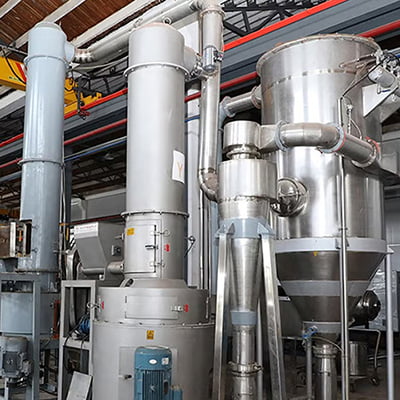
Spin Flash Dryer
Processes pastes and filter cakes into fine, high-quality granular powders using high-velocity hot air and turbulent fluidization.
Learn More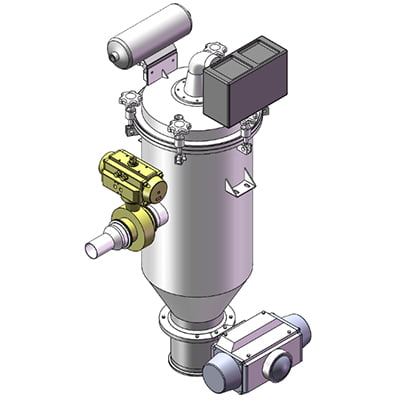
Vacuum Loader
Transfer powders and granules efficiently using vacuum suction, ensuring dust-free conveying.
Learn More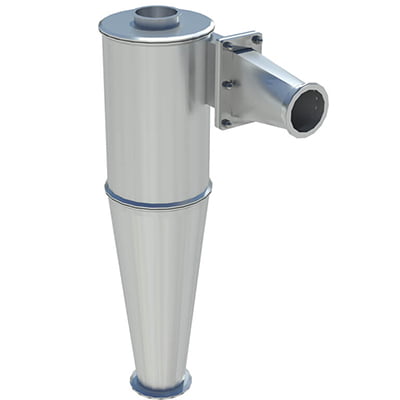
Cyclone Separator
Separates particles from air streams using centrifugal force, enabling efficient dust recovery and gas-solid separation.
Learn More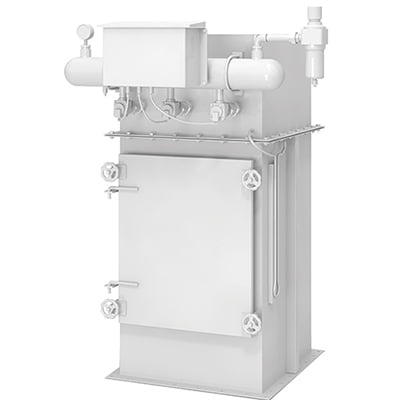
Pulse Jet Dust Collector
Captures airborne dust using filter cartridges with pulse-jet cleaning, ensuring clean air and compliant environments.
Learn More