
Overview
Cyclone Separator
A cyclone separator is a dry gas-solid separation device that separates particles from the air or gas stream, without the use of filters. Cyclone separators play a critical role in various industrial processes because of their simple structure, small footprint, convenient operation and maintenance, and high separation efficiency.
3–10μm
Cut size
90%+
Efficiency
30–60%
Cost Cut
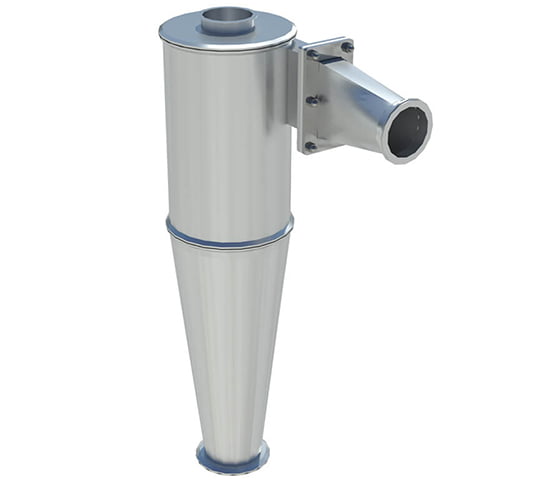
Principle
How does a cyclone separator work?
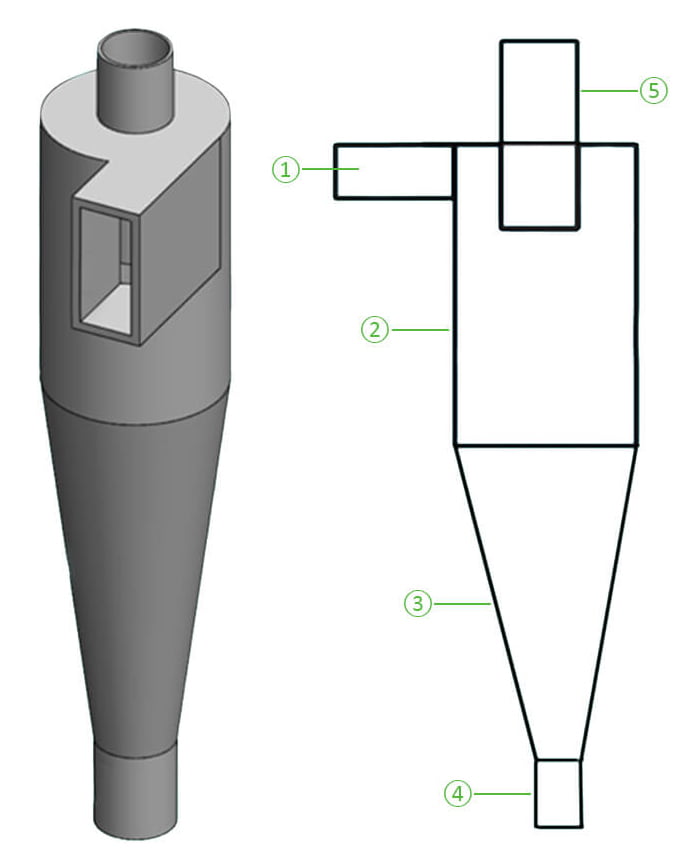
Cyclone Separator diagram
- 1. Inlet
- 2. Cylinder
- 3. Cone
- 4. Collection Hopper
- 5. Outlet
High-Speed Tangential Entry
The gas stream, carrying particles, enters the cyclone through the inlet pipe at a high speed. Because it enters along the tangential direction of the cylindrical body, the stream is forced to start rotating rapidly inside the chamber.
Centrifugal Separation
As the gas stream rotates, it generates a significant centrifugal force. Since the dust and material particles have a larger inertia compared to the air, they are thrown outward, away from the airflow, and impact the inner wall of the cyclone.
Particle Collection
Upon hitting the inner wall, the particles lose their inertia and gravity takes over. They fall downward along the wall of the cone and enter the collection chamber at the bottom, where they are continuously discharged through the rotary valve.
Clean Air Exhaust
When the descending outer rotating air stream reaches the bottom of the cone, it reverses direction. It forms a rising inner swirling stream in the center and is successfully exhausted through the central outlet at the top of the cyclone.
Features
Engineered for High-Efficiency Separation
Simple Construction
Cyclone separators have a straightforward design consisting of a cylindrical or conical body with no moving parts. This simplicity enhances reliability and reduces the risk of mechanical failure.
High Separation Efficiency
Achieving high collection efficiency--often up to 90-99% for particles above a certain size--making them ideal for dust control and product recovery.
Compact Footprint
Cyclones are typically compact in size and do not require a large installation area. Their vertical or horizontal design allows them to fit easily into existing process lines.
Low Maintenance
With no moving components, maintenance requirements are minimal. This reduces downtime and lowers overall maintenance costs, as there are few parts that wear out.
Minimal Energy Consumption
The particle separation process relies on centrifugal force generated by the gas flow itself, requiring very little additional energy input. This makes cyclones an energy-efficient choice compared to other separation equipment.
Low Capital Investment
Compared to alternatives such as baghouses, or scrubbers, cyclone separators have a lower initial cost. Their simple design and affordable materials make them a cost-effective solution for many industrial applications.
Applications
Applicable to demanding production environments.
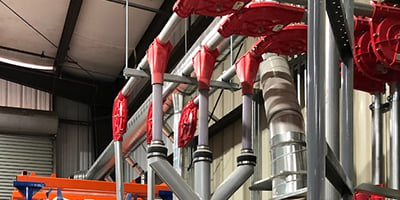
Grain Processing
In grain handling and feed mills, cyclones separate dust from air in pneumatic conveying systems, recovering product.

Dry Ingredients
Cyclones separate dry ingredients from conveying air, or recover food dust during milling, grinding, or spray drying processes.
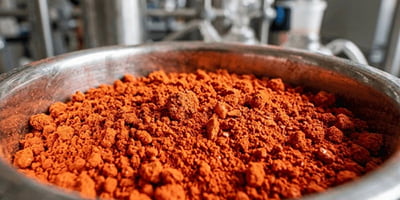
Crystals & Polymers
Used for high-capacity recovery of chemical crystals, polymers, resins, and catalysts from pneumatic conveying or milling systems.

API & Excipient
Engineered with cGMP-compliant, cyclones ensure dust containment, eliminate cross-contamination, and preserve product purity.
FAQ
Answers to the most common technical and commercial questions from procurement managers and process engineers evaluating cyclone separators.
Still have questions?
Our engineers are available for a 30-minute technical consultation.
Book a ConsultationWhat types of particles can it separate?
- Coarse particles (>10 μm) – Approx. ≥95% efficiency
- Medium particles (5–10 μm) – Approx. 60–90% efficiency
What is the optimal inlet velocity?
Can sticky or fibrous dusts be handled with a cyclone separator?
Can Cyclone Separators replace bag filters completely?
Related Equipment
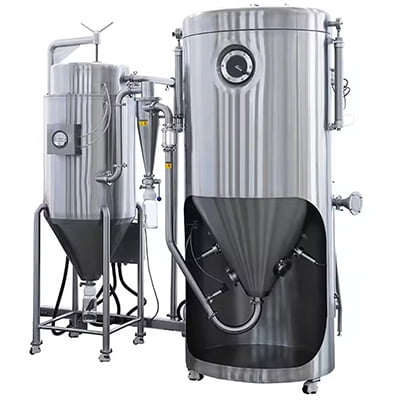
Spray Dryer
Converts liquid feed into uniform powder through rapid atomization and efficient hot air drying for consistent product quality.
Learn More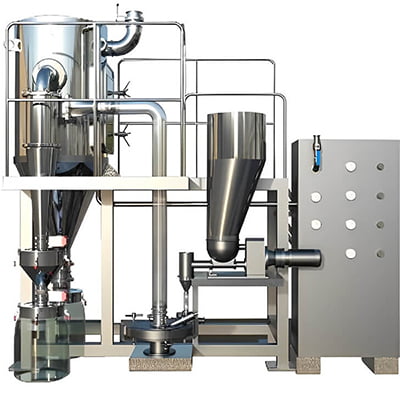
Jet Mill
Uses compressed gas to achieve ultra-fine grinding without heat, ideal for heat-sensitive and high-purity materials.
Learn More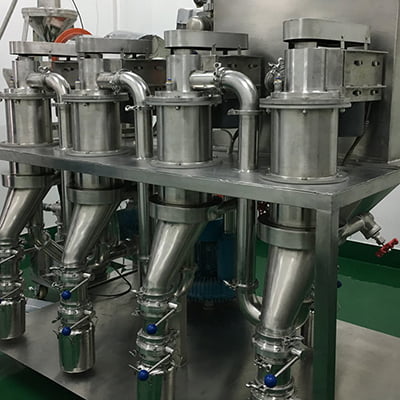
Air Classifier
Separates fine and coarse particles using controlled airflow; provides sharp cuts and precise particle size distribution.
Learn More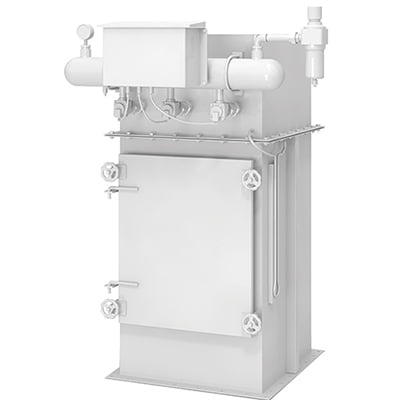
Pulse Jet Dust Collector
Captures airborne dust using filter cartridges with pulse-jet cleaning, ensuring clean air and compliant environments.
Learn More