
Overview
Pulse Jet Dust Collector
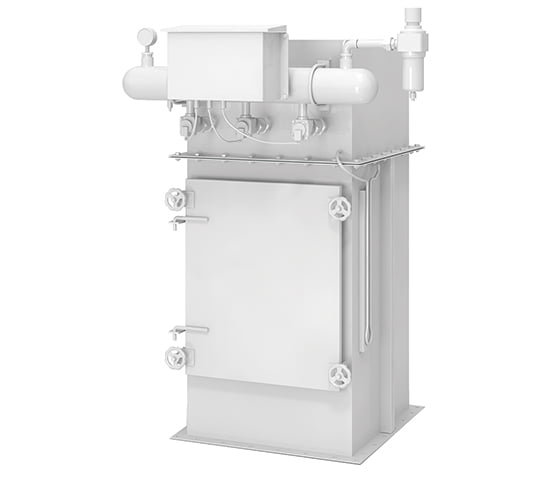
A pulse jet dust collector is a high-efficiency gas-solid separation device widely used for industrial dust control and material recovery. It uses filter bags or cartridges to capture dust particles, while compressed air pulses are periodically released to clean the filter surface automatically. This self-cleaning mechanism ensures stable airflow, low pressure drop, and continuous operation with minimal maintenance.
>99.5%
Filtration Efficiency
2000m³/h
Max. Air flow
<1mg/m³
Emission
Principle
Separate Dust Particles From a Gas Stream.
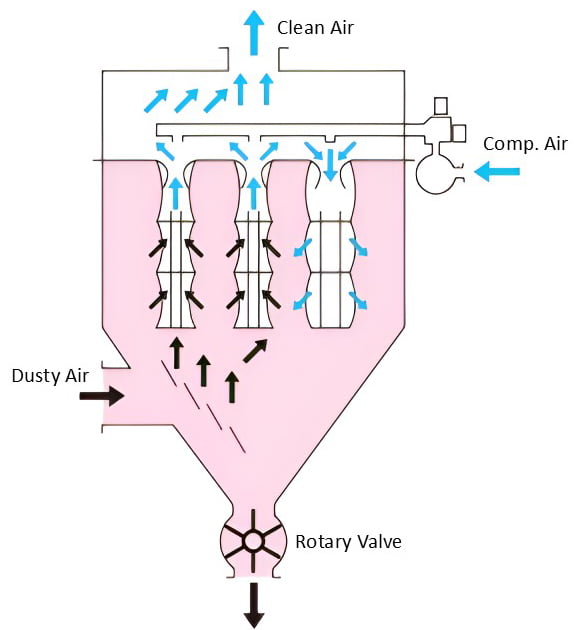
Schematic diagram of pulse jet dust collector
Dust-laden Air Intake
The dusty air enters the dust collector through the inlet. Large dust particles fall into the hopper due to gravity, while fine particles move toward the filter bags or cartridges.
Dust Filtration
As the air passes through the filter bags or cartridges, dust particles are trapped on the outer surface of the filter media. Clean air passes through the filter and flows to the clean air chamber.
Pulse Cleaning
When dust builds up on the filter surface and the pressure drop reaches a preset level, compressed air is released through pulse valves. The high-pressure air pulse causes the filter bags or cartridges to expand rapidly, shaking off the dust.
Dust Discharge
The cleaned air is discharged through the outlet. The removed dust falls into the hopper and is collected or discharged through a rotary valve or screw conveyor. The system continues operating automatically and continuously.
Features
Automatic Pulse Cleaning
Uses compressed air pulses to clean filter bags or cartridges automatically, reducing manual maintenance.
Compact Structure
Designed with a compact layout, saving installation space and making it suitable for different industrial sites.
Easy Maintenance
Filter bags, cartridges, valves, and other components are easy to inspect and replace.
Specification
FAQ
Answers to the most common technical and commercial questions from procurement managers and process engineers evaluating pulse jet dust collectors.
Still have questions?
Our engineers are available for a 30-minute technical consultation.
Book a ConsultationWhat are the common types of filter elements?
The filter elements used in a pulse jet dust collector mainly include:
- Fabric filter bag – Low cost, and widely applicable
- Cartridge filters – Compact design with large filtration area
- Metal filters – High-temperature resistance and washable, used in special applications
How is pulse jet cleaning controlled?
Pulse jet cleaning is typically controlled by the following methods:
- Time-based control – pulsing at fixed time intervals
- Differential pressure control – cleaning is triggered based on the pressure drop
- PLC control – integrated control based on pressure, timing, and system conditions
What is the typical operating pressure of the system?
What does maintenance of a pulse jet dust collector include?
Main maintenance includes:
- Monitoring differential pressure
- Inspecting pulse valves and solenoid valves.
- Checking filter elements for damage or blockage.
Related Equipment
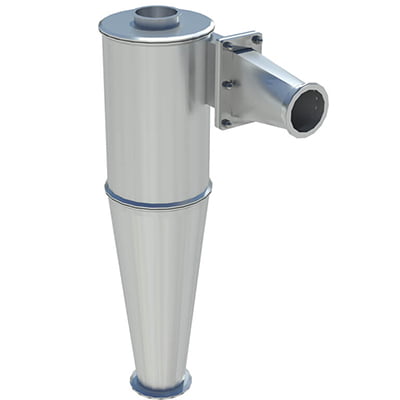
Cyclone Separator
Separates particles from air streams using centrifugal force, enabling efficient dust recovery and gas-solid separation.
Learn More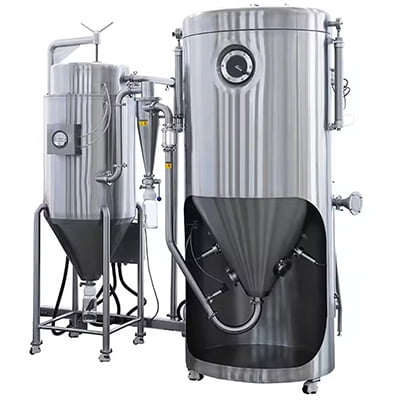
Spray Dryer
Converts liquid feed into uniform powder through rapid atomization and efficient hot air drying for consistent product quality.
Learn More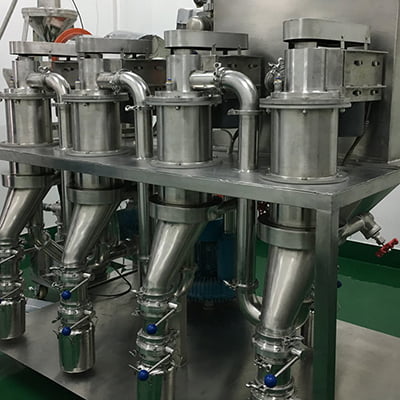
Air Classifier
Separates fine and coarse particles using controlled airflow; provides sharp cuts and precise particle size distribution.
Learn More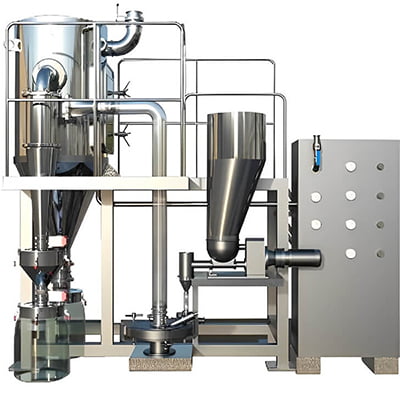
Jet Mill
Uses compressed gas to achieve ultra-fine grinding without heat, ideal for heat-sensitive and high-purity materials.
Learn More