
Overview
Flexible Isolator
The flexible isolator redefines containment solutions by combining high‑strength engineered polymer films with accurate airflow control. It forms a sealed, ergonomic workspace that physically separates operators from critical materials.
Rapid to install, simple to modify, and compatible with single‑use consumables, it empowers your teams to accelerate your project timeline while maintaining safety and compliance.
Core Advantages
High Performance
Modern flexible films and fail‑safe pressure‑decay monitoring create a verified enclosure. The system simultaneously protects the product from external contamination.
Rapid Deployment
Compared with a rigid stainless steel isolator, a flexible isolator can be designed, fabricated, and deployed on-site within 4 to 8 weeks.
Low Cost
Flexible isolators require a fraction of the initial investment of rigid systems because they utilize disposable polymer films instead of costly welded stainless steel.
OEB5
Containment Level
4-8wks
Lead Time
-60%
Initial Investment
Decision Framework
Flexible Isolator vs. Rigid Isolator: Which Fits Your Process?
| Evaluation Metric |
Flexible Isolator
|
Rigid Isolator
|
|---|---|---|
| Construction Material | Polymer film, lightweight | Stainless steel or acrylic hard shell |
| Containment Capability | OEB 4-5, <1 μg/m³ achievable | OEB 5-6, < 0.01 µg/m³ achievable |
| Relative Initial Cost | 20% - 40% | 100% (Baseline) |
| Installation & Footprint | Compact, portable, rapid deployment | Fixed, large footprint, complex installation |
| GMP / Pharma Suitability | GMP-compliant, single-use film options | Full GMP compliance, validated CIP/SIP |
| Lead Time to Deployment | 4 - 8 weeks | 32 - 50+ weeks |
| Batch Turnaround / Swapping | 1 - 2 hours (Single-use swap) | 24 - 72 hours (Requires CIP/VHP) |
| Cleaning Validation Cost | $0 (Disposable) | High (Continuous testing) |
* Containment performance data based on surrogate powder testing per SMEPAC guidelines. Actual values vary by process integration.
Solutions
From standalone lab-scale enclosures to fully integrated bulk handling equipment.
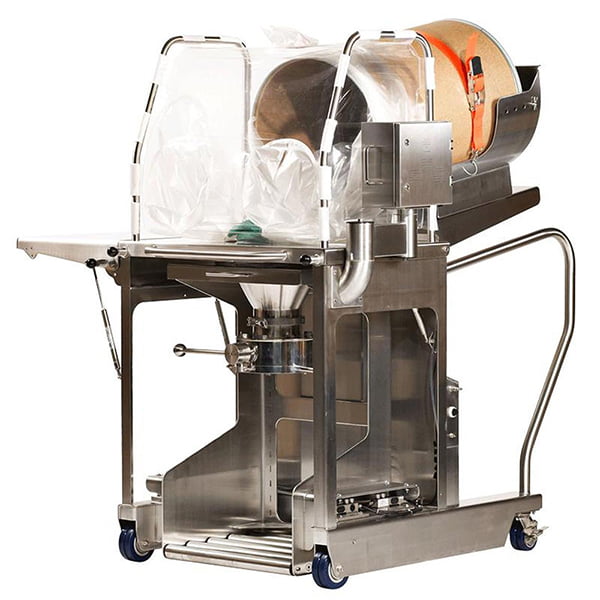
Drum Transfer Isolator
The drum transfer station is designed specifically for safe raw material dispensing, and mass transfer from bulk drum containers. The entire assembly is mobile and can be wheeled over the piece of process equipment to be charged.
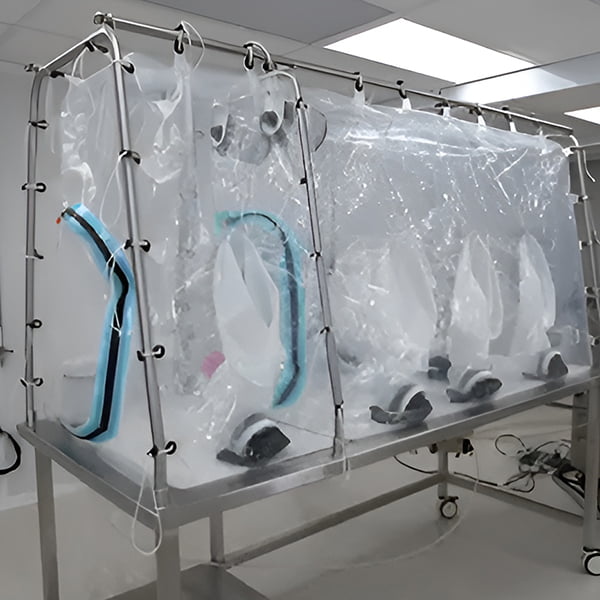
HPAPI Flexible Isolator
A high-containment, single-use glovebox engineered to handle Highly Potent Active Pharmaceutical Ingredients (HPAPIs) requiring OEB 4 and OEB 5 compliance.
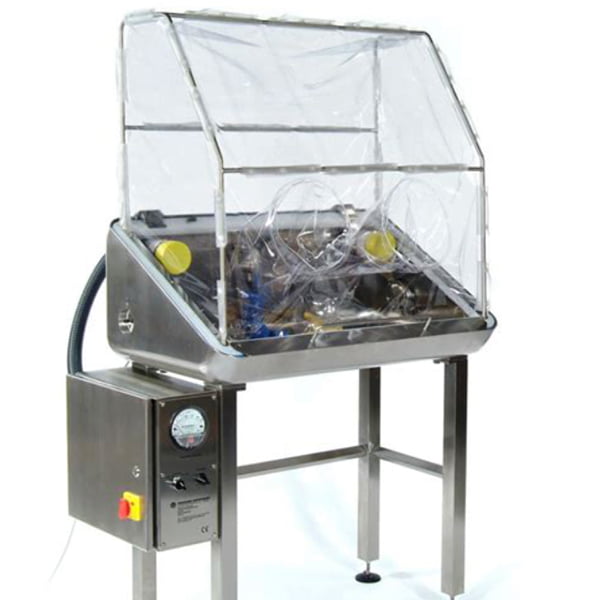
Benchtop Isolator
A compact, space-saving flexible isolator designed to sit or stand directly on standard laboratory workbenches or tables. It is suitable for lab-scale R&D and small-batch weighing.
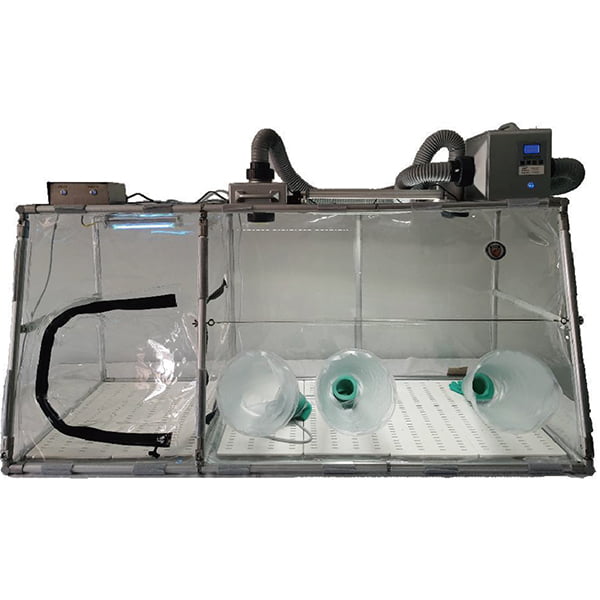
Flexible Enclosure
Made from flexible film materials, it is a custom-engineered barrier system designed to create a controlled, enclosed workspace for protecting the product, the operator, or the surrounding environment.
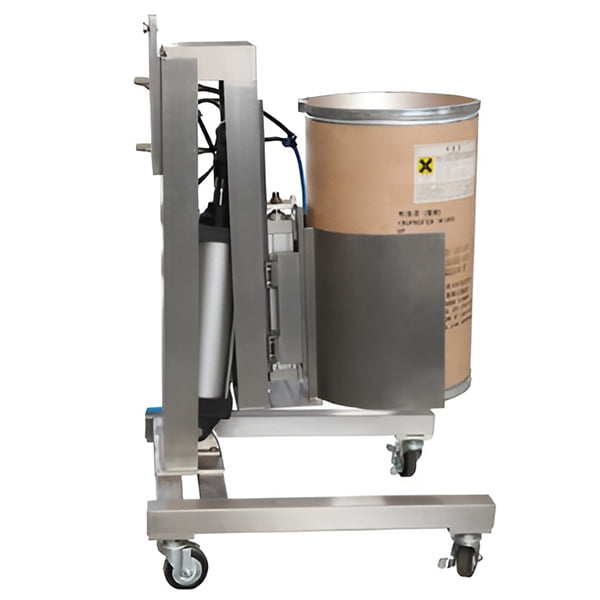
Drum Tipper
A mechanical handling device used to lift, tilt, and empty drums or barrels safely and efficiently. It helps reduce manual handling, improve operator safety.
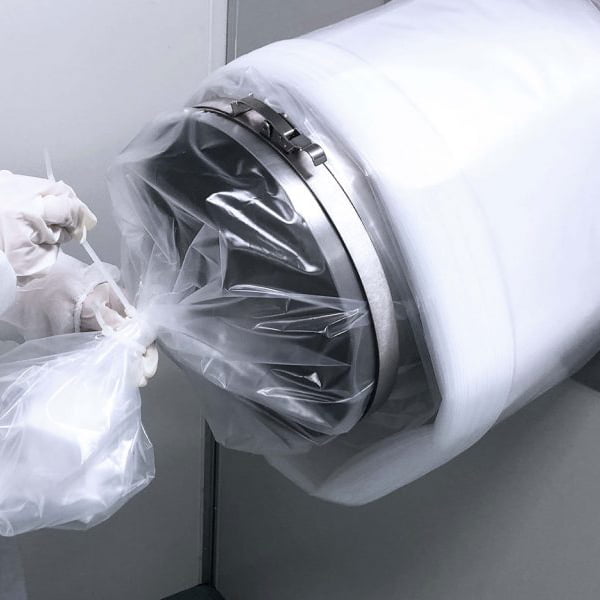
Continuous Liner
A continuous, tubular polymer film system utilized for the safe bag-out and disposal of contaminated products, waste etc. A continuous liner helps maintain containment, reduce operator exposure, prevent cross-contamination.
Features
Effective Containment
Despite being lightweight and flexible, these systems deliver great protection that is just as effective as that of a rigid isolator.
Customizable Design
Can be designed with glove ports, sleeves, transfer ports, pass-through chambers, continuous liners, HEPA filtration, or integration with process equipment.
Flexible Film Construction
Made from transparent flexible film such as TPU, PE, PVC or other polymer films, offering good visibility and operational flexibility.
Compact & Space-Efficient
Lightweight and easy to install, move, or retool, making it ideal for limited lab or production spaces and for temporary containment setups.
Process Ergonomics
The flexible film naturally moves and conforms to the operator's hands. The good visibility of modern films ensures an unobstructed view of intricate tasks.
Easy Cleaning
Smooth, non-porous film surfaces are easy to wipe down, decontaminate. It can be replaced without major downtime -- no need for complicated disassembly.
Specification
All parameters are verified under factory acceptance test (FAT) conditions. Custom configurations available upon process audit.
Containment & Environment
| ISO Cleanliness Class | ISO Class 5 (Grade A) |
| Containment Performance | < 1 μg/m³ OEL |
| Pressure Differential | −35 to −80 Pa (neg. mode) |
| HEPA Filtration | H14 (EN 1822), 99.995% |
| Bio-decontamination | VHP / Manual Disinfection |
Structural & Materials
| Frame Material | 316L Stainless Steel |
| Flexible Film | LDPE / TPU / PVC |
| Glove Port Standard | ISO 11933-2 |
| Surface Finish (Ra) | ≤ 0.4 μm (interior) |
| Transfer System | Rapid Transfer Port |
FAQ
Answers to the most common technical and commercial questions from procurement managers and process engineers evaluating flexible isolators.
Still have questions?
Our engineers are available for a 30-minute technical consultation.
Book a ConsultationIs a Flexible Isolator typically operated under positive or negative pressure?
It depends.
For handling potent, toxic powders, the isolator is usually operated under negative pressure (e.g., -35 Pa to -70 Pa) to prevent leakage of contaminants into the environment. For protecting product sterility (when the material is non‑hazardous), positive pressure may be used to keep outside contaminants out.
How to verify the leak-tightness and structural integrity of a flexible isolator before production?
How are materials transferred into and out of a Flexible Isolator?
Common transfer methods:
- RTP (Rapid Transfer Port) – A high-containment, bidirectional transfer mechanism.
- Continuous liner system – For waste or high‑activity powder removal; the liner is heat‑sealed and cut segment by segment.
- Airlock / pass‑box – Rigid or flexible chamber with interlocked doors.
- Zip closure – Quick opening for large items or maintenance; double zip or gas‑tight zipper designs offer better containment.
Does a Flexible Isolator need to be equipped with an H14 HEPA filter?
What are the key maintenance points for a Flexible Isolator?
Key maintenance points:
- Film inspection – check for abrasion, cracking, yellowing.
- Glove and glove port – replace gloves at scheduled intervals; verify port seals.
- HEPA filters – monitor differential pressure; perform integrity testing annually.
- Cleaning & disinfection – ensure disinfectants do not degrade the film or gloves.
- Instrument calibration – calibrate pressure sensors, airflow meters, temperature probes, and alarms.
Related Equipment
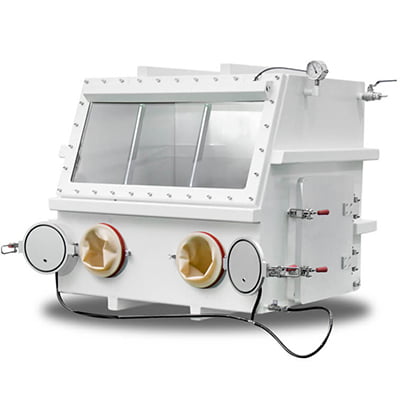
Laboratory Glove Box
Provides a sealed, inert atmosphere for handling air-sensitive materials; protects samples and users.
Learn More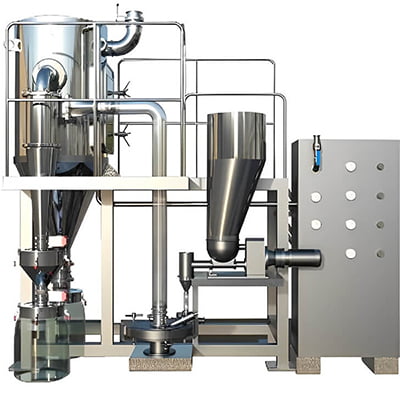
Jet Mill
Uses compressed gas to achieve ultra-fine grinding without heat, ideal for heat-sensitive and high-purity materials.
Learn More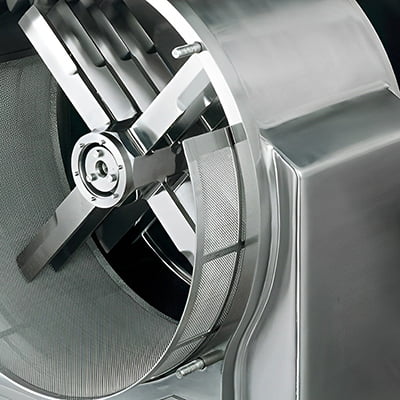
Hammer Mill
Reduces material size by high-speed rotating hammers, suitable for medium grinding of various brittle materials.
Learn More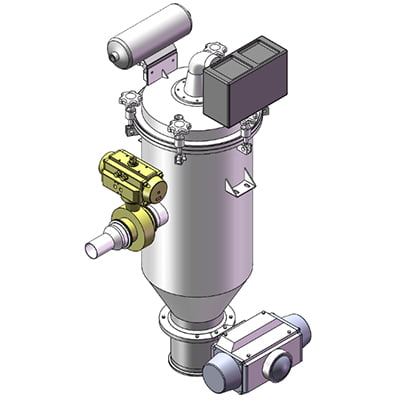
Vacuum Loader
Transfer powders and granules efficiently using vacuum suction, ensuring dust-free conveying.
Learn More