
Overview
Hammer Mill
A hammer mill is a robust size-reduction machine that uses high-speed rotating hammers to impact, shear, and break down bulk materials into fine or medium-fine powders.
Inside the grinding chamber, feed material is repeatedly struck by hammers mounted on a high-speed rotor. The combination of impact and shear forces reduces particles to the target size range, which is controlled by an interchangeable screen.
Core Advantages
Easy to Clean
Tool-free disassembly with smooth stainless steel contact surfaces and no dead zones. GMP-compliant design, minimal cross-contamination.
Adjustable Fineness
Interchangeable screens and variable rotor speed allow precise control over final particle size from coarse granules down to fine powders, minimising re-work.
Wide Compatibility
Handles a wide range of materials -- from brittle, fibrous, and crystalline to moderately hard solids. ATEX‑certified configurations can be supplied.
D50<30µm
Achievable D50
2000kg/h
Max Throughput
316L
GMP-Grade Steel
Principle
How Does a Hammer Mill Work?
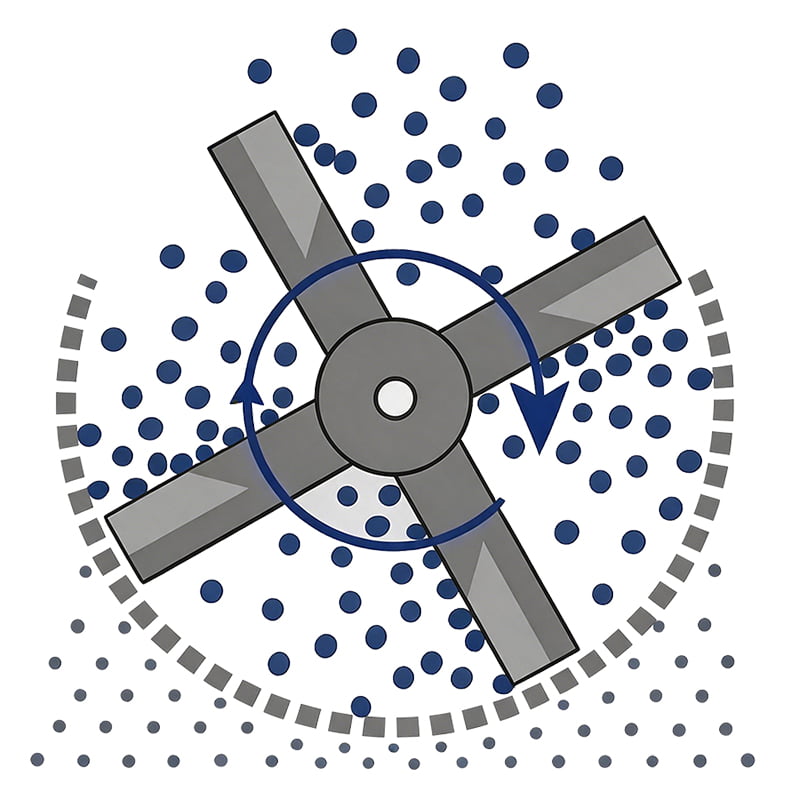
Hammer mill diagram
Material Feeding
The raw material enters the machine through the feed hopper at the top. Gravity feeding system directs the material into the grinding chamber at a controlled rate to prevent overloading.
Impact & Comminuition
Inside the chamber, a central rotor spins at high speeds. High‑speed hammers deliver powerful direct impacts, shattering friable and crystalline particles immediately upon entry.
Inter-Particle Collision
The force of the spinning hammers flings the fragmented particles against the liner plates of the housing, causing further impact fracture. Particles collide with each other at high velocity, leading to rapid attrition and further size reduction.
Discharge
Material is forced through a perforated screen that defines the final particle size. Fine particles exit the mill, while oversized particles are retained inside the chamber for continued processing.
Capacity Range
Lab Scale
0.1 kg/h - 1 kg/h
Pilot Scale
1 kg/h - 30 kg/h
Industrial Scale
50 kg/h - 2+ t/h
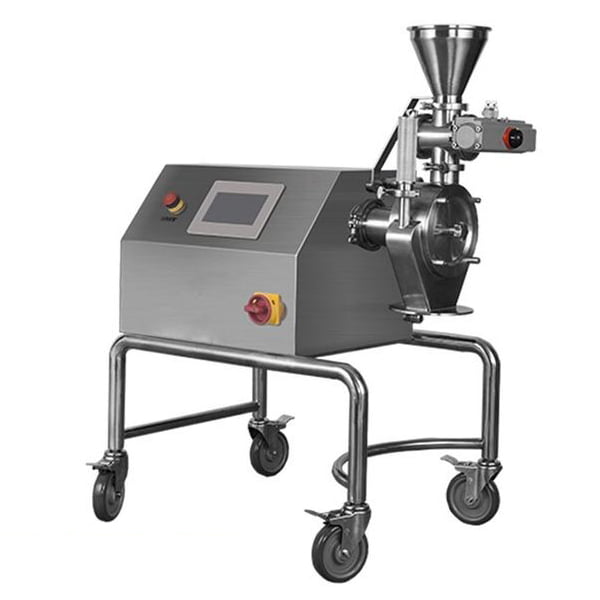
Laboratory Hammer Mill
A compact, high-speed grinding device designed for analytical testing, quality control, and small-scale sample preparation. It features variable speed controls and interchangeable screens to ensure reproducible particle size reduction.
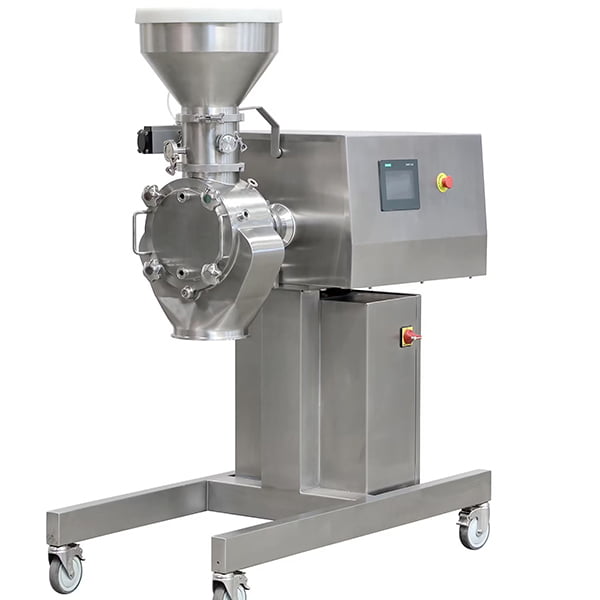
Pilot Hammer Mill
Engineered for process validation, scale-up testing, and small-batch manufacturing. It offers flexible, reliable, and cost-effective processing for pilot plants in the food, pharmaceutical, and chemical industries.
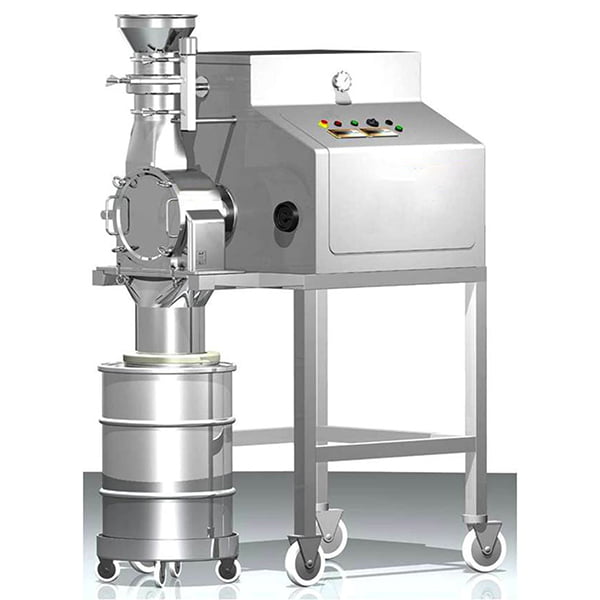
Industrial Hammer Mill
Constructed entirely from high-grade stainless steel to ensure maximum hygiene and superior corrosion resistance. It is engineered for continuous, high-capacity size reduction while meeting strict sanitary and regulatory compliance standards.
Features
Modular Design
Our hammer mill features a compact and modular construction designed for ease of use and operation flexibility. Key components such as the rotor and sieve can be quickly and easily changed, reducing downtime during product changeovers.
High Hygiene
The design of the hammer mill focuses on the strict hygiene standards required in sanitary environments. The system also complies with WIP standards, enabling effective internal cleaning.
Low Maintenance
It is equipped with safety switches on the inlet and front door, as well as a protective screen at the outlet. Its simple and intuitive design reduces maintenance needs, enhancing long-term operational efficiency.
Specification
HM Series Data Sheet
| Model | Rated power (kW) | Grinding speed (rpm) | Capacity (kg/h) |
|---|---|---|---|
| HM100 | 2.2 | 1,000-18,000 | 0.5 - 5 |
| HM150 | 3.7 | 1,000-12,000 | 0.5 - 30 |
| HM200 | 3.7 | 1,000-12,000 | 1 - 100 |
| HM500 | 5.5 | 1,000-10,000 | 50 - 800 |
| HM700 | 7.5 | 500-6,000 | 50 - 2,000 |
* Capacity values are indicative and depend on material properties, target fineness.
General Parameters
- Achievable D50 < 20 - 200 μm
- Feed Particle Size (max) ≤ 2 mm
- Contact Material Stainless steel
- Temperature Range -20°C to +60°C
- Hardness of material 1 - 5 Mohs
Download Full Technical Datasheet
Get the complete specifications, and performance data in one document. PDF · ~2MB
Applications
Pharma
Pharmaceutical Hammer Mill
Designed in strict compliance with cGMP and FDA standards. It features an easy-to-clean, dust-free design with CIP capabilities, precise temperature monitoring, and explosion protection.
Food
Food Hammer Mill
Designed for grinding food ingredients such as grains, spices, sugar, or dried fruits into powders or pastes. It complies with food safety regulations, using stainless steel construction and easy-to-clean components to prevent contamination.
Chemical
Chemical Hammer Mill
A robust grinding system engineered to process a wide range of chemical substances. It offers explosion-proof options, corrosion-resistant materials, and adjustable particle size to meet specific chemical handling requirements.
FAQ
Answers to the most common technical and commercial questions from procurement managers and process engineers evaluating hammer mills.
Still have questions?
Our engineers are available for a 30-minute technical consultation.
Book a ConsultationHow does your hammer mill prevent cross-contamination between different batches?
Our mills are designed for easy cleaning.
- Quick-Disassembly – The milling chamber, hammers, and screens can be fully dismantled in minutes without special tools.
- No Dead Corners – All internal welds are ground smooth and polished to eliminate material trapping.
- WIP/CIP Ready – We offer optional WIP or CIP systems with sanitary tri-clamp connections for thorough washdowns between batches.
How do you control the temperature inside the mill?
We offer two main cooling solutions:
- Air-Swept Cooling – a controlled stream of air flows through the milling chamber to continuously remove heat.
- Water-Jacketed Cooling – A cooling jacket surrounds the milling chamber, circulating chilled water to absorb heat during continuous operation.
What maintenance is required for a hammer mill in continuous production?
How do I choose the right screen size (mesh) for my application?
Our hammer mills can generally achieve particle sizes ranging from 20 mesh down to 120 mesh, depending on the material characteristics. The particle size distribution is easily controlled by:
- Exchanging the screens for other mesh sizes.
- Adjusting the rotor speed via a Variable Frequency Drive (VFD).
Can these hammer mills handle sticky, oily, or high-moisture ingredients?
It is generally not recommended. If your process requires milling these challenging materials, consider the following methods:
- Dehydration – to reduce the moisture content of the material below the critical threshold required.
- Cryogenic Grinding – For extremely heat-sensitive or oily materials, we integrate a liquid nitrogen feeding system to pre-cool and embrittle the material.
Related Equipment
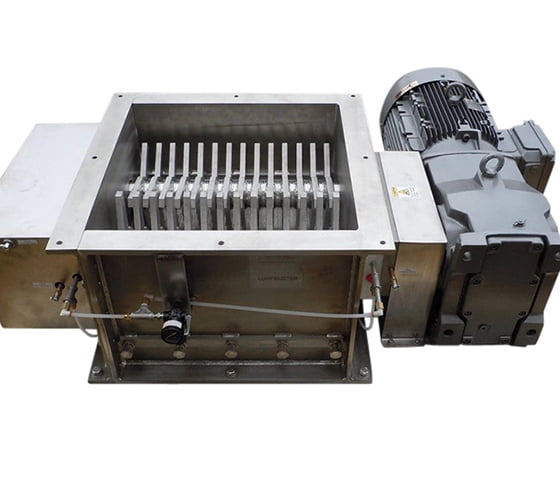
Lump Breaker
Breaks large agglomerates or caked materials into smaller particles, facilitating handling and further processing.
Learn More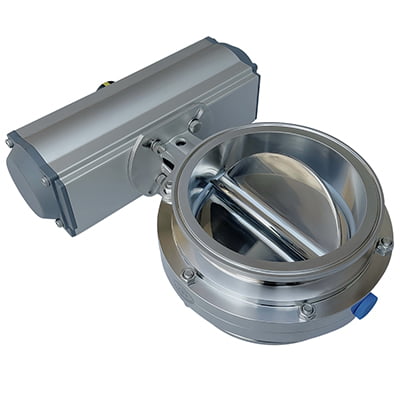
Rotary Feeder Valve
Provides controlled and metered feeding of bulk solids, helping to prevent excessive material flow.
Learn More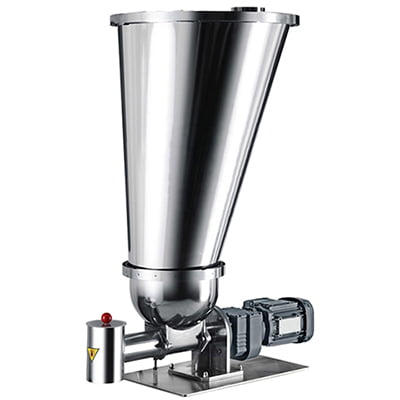
Volumetric Feeder
Delivers consistent material flow based on volume measurement, suitable for stable and simple dosing applications.
Learn More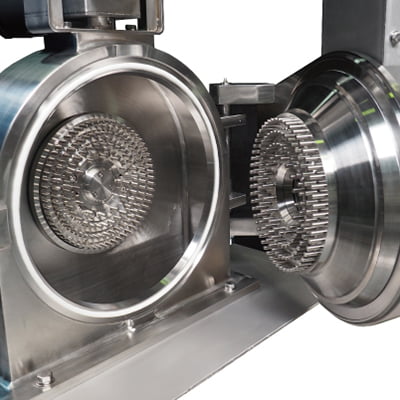
Pin Mill
Utilizes high-speed pin discs for fine grinding, providing uniform particle size distribution for dry, friable materials.
Learn More