
Overview
Spin Flash Dryer
A spin flash dryer combines pneumatic (air-flow) drying technology with fluidization technology. It provides continuous, high-efficiency drying of pastes, filter cakes, and slurries into fine dry powder in a single step.
<1%
Final Moisture
5-30s
Residence Time
2t/h
Evap. Capacity
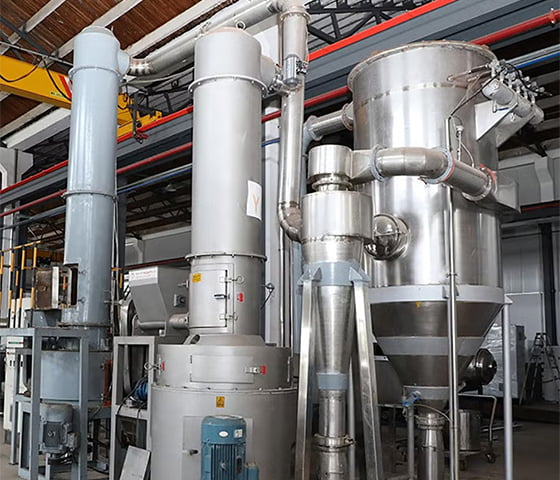
Principle
How does a spin flash dryer work?
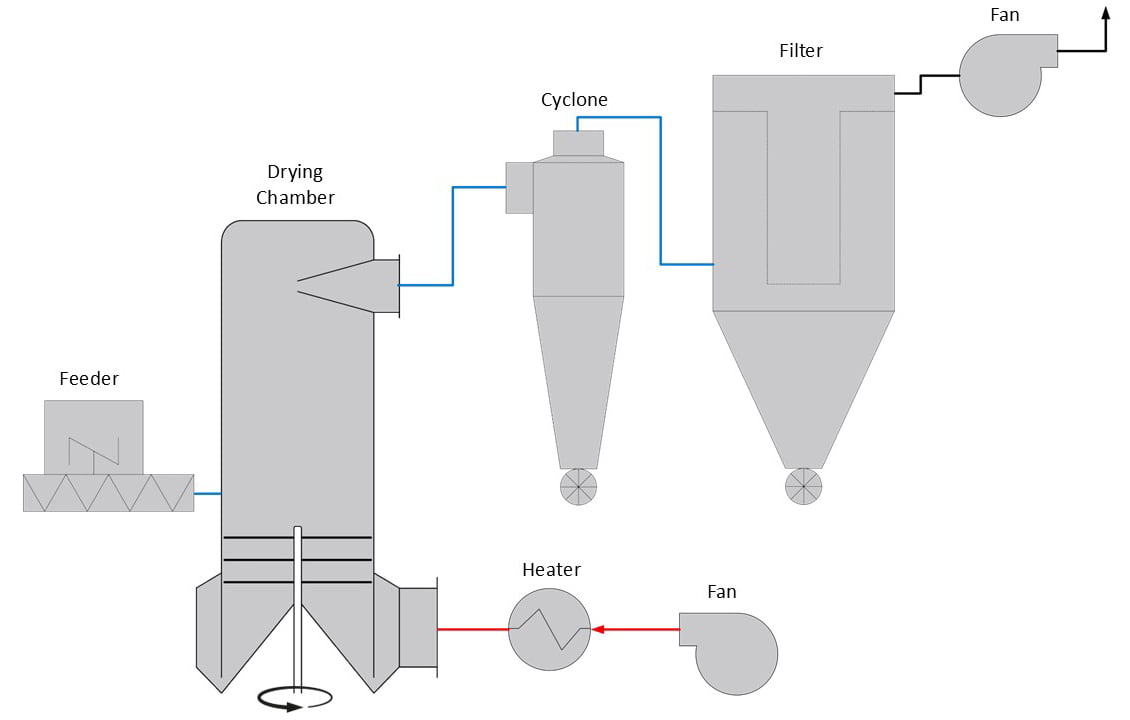
Schematic Diagram of Spin Flash Drying
Material Feeding
Wet materials such as filter cakes, slurries, or pastes are continuously fed into the system. Before drying, they are mechanically stirred and broken into a more uniform consistency to avoid large lumps.
Mechanical Dispersion
When wet material enters the bottom of the dryer, a high-speed rotating agitator strikes the material, breaking it into smaller particles. This step greatly increases surface area and prepares the material for fast drying.
Swirling Hot-air Contact
Hot air is blown into the bottom of the dryer. It enters the drying chamber in a tangential direction, creating a strong vortex airflow inside the vertical drying chamber.
Flash Drying
The particles rotate and move upward inside the drying chamber. Because the material is highly dispersed, it has a massive surface area exposed to the hot air. As a result, the moisture evaporates rapidly.
Collection
Near the top of the drying chamber there is a classification ring. Only particles that are small enough can pass through. Oversized, still-wet particles bounce back into the drying zone. The fine, dry powder is carried by the air stream to a bag filter or cyclone.
Features
Continuous Operation
Wet feed material is constantly introduced into the drying chamber and an equal amount of dried powder is continuously discharged from the collection system.
One‑Step Drying
The entire transformation from moist feed to final dry powder happens inside a single unit. This eliminates the need for separate drying stages or additional equipment.
High Efficiency
Due to the strong contact between hot air and finely dispersed particles, heat and mass transfer occur very rapidly. The moisture in the material evaporates within seconds.
Processing of Difficult Feeds
Suitable for challenging materials such as filter cakes, slurries, and highly viscous pastes. Its powerful rotor can break down feeds into fine, manageable particles.
Built-in Size Control
A classification mechanism can be integrated into the drying chamber. Fine, fully dried particles are separated and collected, while larger particles are recirculated for further drying.
Self‑Cooling
Dried particles are quickly removed from the hot zone, which reduces thermal exposure and makes the system suitable for heat-sensitive materials.
Specification
| Model | Inner Dia. (mm) | Rated Power (kW) | Air Flow (m³/h) | Evap. Rate (kg/h) | Height (m) |
|---|---|---|---|---|---|
| XZG-2 | 200 | 5-10 | 300-800 | 10-20 | 4 |
| XZG-4 | 400 | 10-18 | 1,250-1,500 | 25-70 | 4.8 |
| XZG-6 | 600 | 20-29 | 2,500-5,000 | 40-200 | 5.8 |
| XZG-8 | 800 | 24-35 | 3,000-8,000 | 60-600 | 6.5 |
| XZG-10 | 1,000 | 40-62 | 5,000-12,500 | 100-1,000 | 7.1 |
| XZG-12 | 1,200 | 50-89 | 10,000-20,000 | 150-1,300 | 7.8 |
| XZG-14 | 1,400 | 60-105 | 14,000-27,000 | 200-1,600 | 8.8 |
| XZG-16 | 1,600 | 70-135 | 18,700-36,000 | 250-2,000 | 10.1 |
Download Full Technical Datasheet
Get the complete specifications, and performance data in one document. PDF · ~2MB
Applications
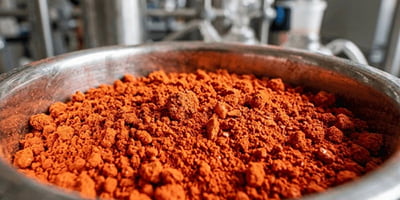
Inorganics
Widely used for drying various inorganic materials such as metal hydroxides, carbonates, sulfates, oxides, and mineral slurries.

Dyes
The final colorants or dye intermediates maintain consistent particle size, uniform quality, and chemical stability,

Pesticide
In pesticide formulation, the spin flash dryer is employed to convert wet pesticide filter cakes into stable dry powders.

Starch & Yeast
The rapid evaporation prevent thermal degradation, preserving nutritional value, taste, and functional properties.
Drying Reference
| Parameter |
Stearic Acid |
Aluminum Hydroxide |
Zinc Carbonate |
Nereistoxin Oxalate |
Calcium Carbonate |
Iron Oxide Red |
Antimony Trioxide |
Cuprous Chloride |
|---|---|---|---|---|---|---|---|---|
| Inlet Air Temp (°C) | 150 | 180 | 150 | 120 | 160 | 200 | 180 | 200 |
| Initial Moisture (%) | 80 | 55 | 80 | 30 | 70 | 60 | 45 | 30 |
| Final Moisture (%) | 0.5 | 1.5 | 1.0 | 1.0 | 1.5 | 0.5 | 1.0 | 3.0 |
| Drying Capacity (kg/h) | 140-160 | 250-280 | 130-170 | 80-110 | 430-470 | 300-350 | 280-320 | 290-310 |
* Data from actual production trials based on XZG-6. Parameters may vary subject to feed characteristics and equipment configuration.
FAQ
Answers to the most common technical and commercial questions from procurement managers and process engineers evaluating spin flash dryers.
Still have questions?
Our engineers are available for a 30-minute technical consultation.
Book a ConsultationWhat moisture levels can be handled?
What inlet air temperature is typically used?
How long does drying take in a spin flash dryer?
How can a spin flash dryer be made safe for organic solvents?
You must utilize a Closed-Loop System specifically designed for solvent recovery.
- Inert Gas Atmosphere – Use an inert gas to eliminate oxygen and prevent combustion.
- Solvent Recovery – A condenser is installed to capture and recover the evaporated solvent from the exhaust stream.
- High-Level Sealing – The system must be hermetically sealed to prevent solvent vapor leakage and air ingress.
Related Equipment
You May Also Need
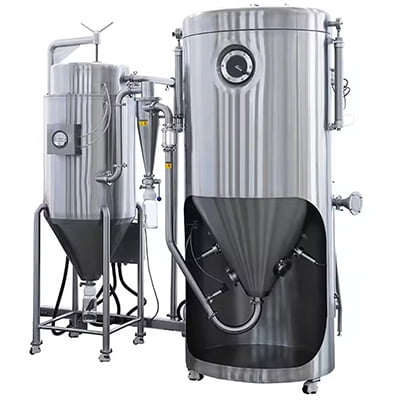
Spray Dryer
Converts liquid feed into uniform powder through rapid atomization and efficient hot air drying for consistent product quality.
Learn More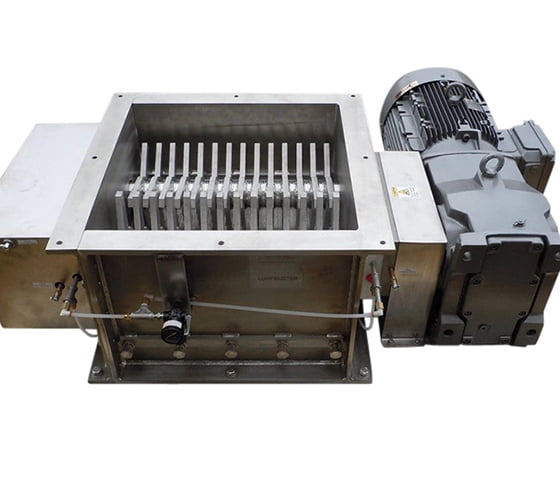
Lump Breaker
Breaks large agglomerates or caked materials into smaller particles, facilitating handling and further processing.
Learn More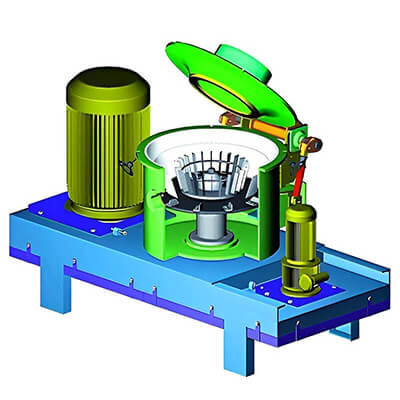
Air Classifier Mill
Combines grinding and classification in one unit; internal classifier instantly extracts fines for consistent, efficient output.
Learn More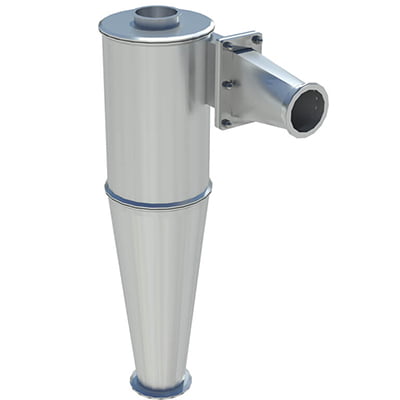
Cyclone Separator
Separates particles from air streams using centrifugal force, enabling efficient dust recovery and gas-solid separation.
Learn More