
Overview
Two-Fluid Nozzle Spray Dryer
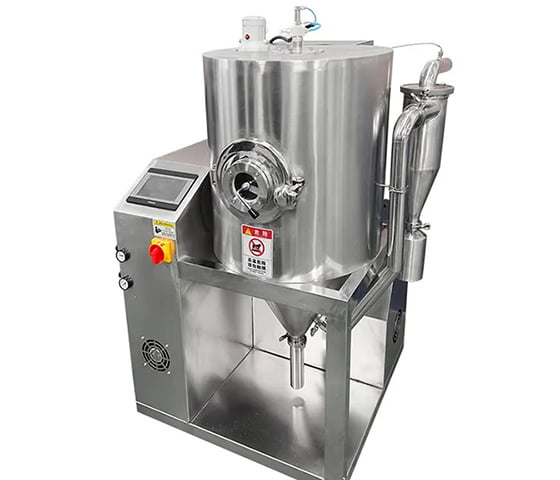
A Two-Fluid Nozzle Spray Dryer uses a combination of liquid feed and high-velocity compressed air to atomize liquids into a fine mist for drying. The energy of the expanding gas shears the liquid into fine droplets, typically with a size range of 10–80 μm.
10-100μm
Particle Size Range
5-500L/h
Custom Made
GMP+
Compliant Design
Principle
How Two-Fluid Atomization Works
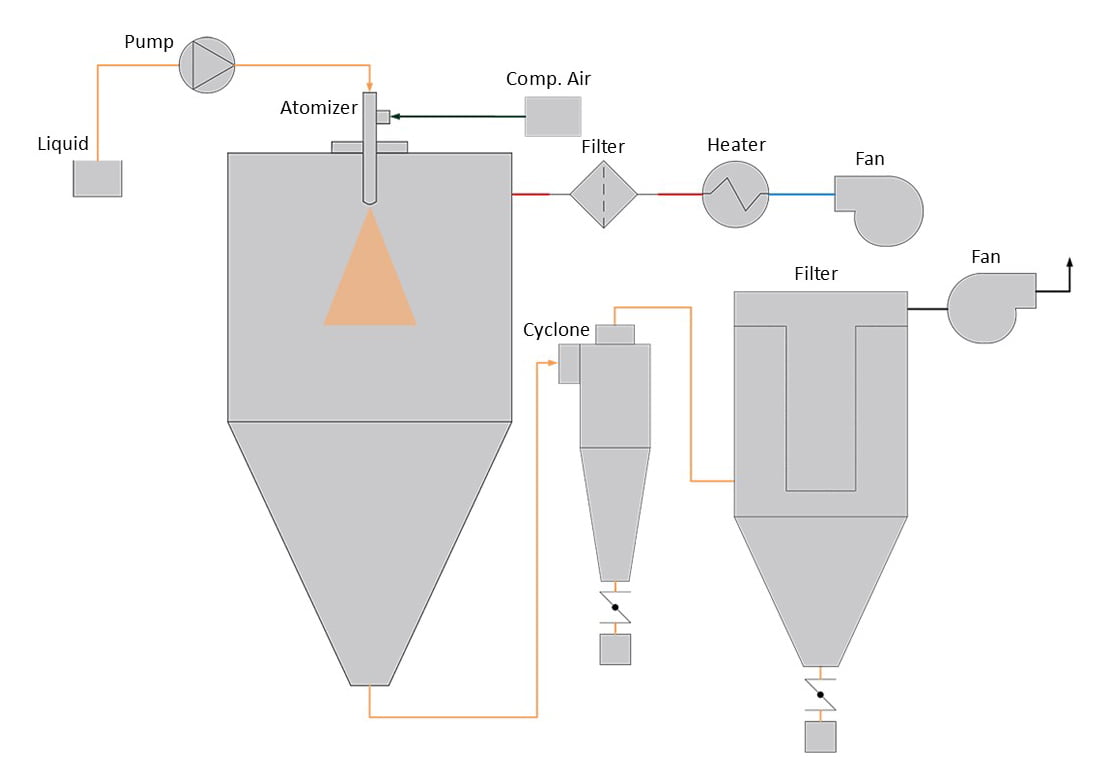
Schematic Diagram of Two-Fluid Nozzle Spray Dryer
Liquid Feeding
The liquid feed (solution, emulsion, or slurry) is pumped at a controlled rate to the spray nozzle located at the top of the drying chamber.
Hot Air Contact
Hot air enters the drying chamber. The fine droplets instantly come into contact with the hot air, causing rapid evaporation of the solvent.
Compressed Gas Supply
Simultaneously, a separate stream of compressed gas (typically air or nitrogen) is fed into the nozzle. This gas provides the kinetic energy needed to break the liquid apart.
Instant Drying
The droplets shrink and solidify gradually, forming dry particles. This transformation typically occurs within seconds.
Atomization
Inside the two-fluid nozzle, the high-speed gas collides with the liquid. This process breaks the liquid into a fine mist of tiny, uniform droplets, maximizing the surface area for drying.
Separation & Collection
The dried particles are carried by the airflow to a cyclone or a bag filter. Depending on the system design, the cleaned exhaust gas is either released or recycled.
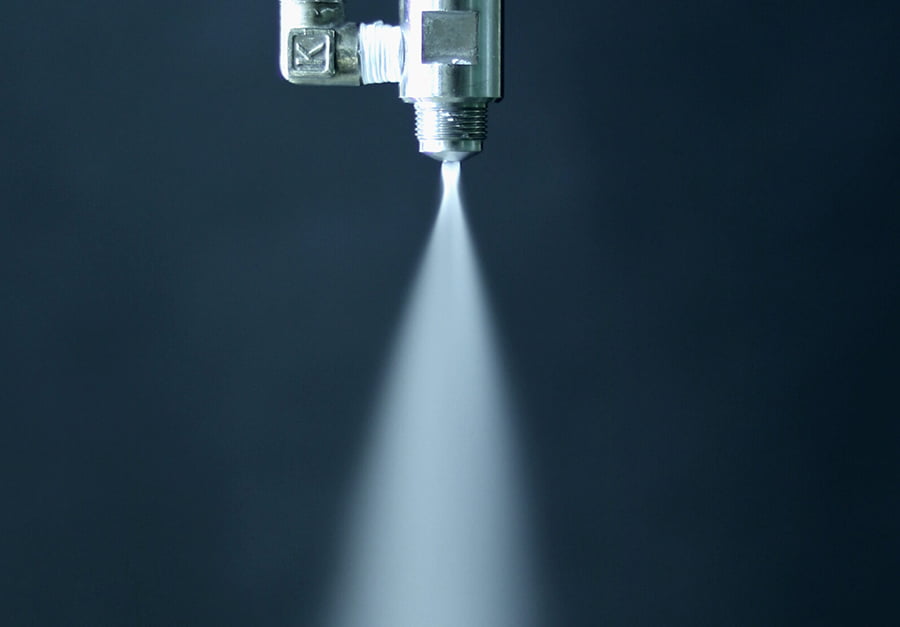
Two-Fluid Nozzle Atomizer
Pneumatic Atomization
A two-fluid nozzle is an atomization device that uses two separate fluid streams: a liquid feed and a pressurized gas. At the nozzle tip, the two streams meet and the fast gas breaks the liquid into a fine mist.
Unlike rotary atomizers or pressure nozzles, two-fluid nozzles offer precise, independent control over both the liquid flow rate and the gas-to-liquid ratio — making them the preferred choice for pilot-scale R&D, and materials with high viscosity or low feed rates.
Features
Precise Particle Control
Adjustable atomizing air pressure and liquid feed rate enable fine-tuning of droplet size, directly controlling final particle size distribution from D50 10 μm to 100 μm.
Gentle Thermal Processing
The flash drying prevents thermal degradation, making it the industry standard for heat-sensitive products like enzymes, proteins, and APIs.
Viscosity Handling
It dramatically reduces the risk of clogging. This allows the system to process highly viscous slurries and high-solid-content suspensions.
Stable Low-Flow Atomization
Even at liquid feed rates as low as mL/min, the high-speed gas stream ensures fine, drip-free atomization. This makes it ideal for lab-scale R&D of low-volume materials.
Independent Process Control
Liquid flow rate and atomization gas pressure are adjusted independently, giving operators precise, real-time control over droplet size and spray pattern.
GMP Compliant
Designed as a fully closed system, it minimizes contamination risk and supports validated CIP/SIP procedures for effective cleaning and sterilization.
Specification
Custom configurations are available upon material testing.
| Parameter | Lab |
Pilot |
Production |
|---|---|---|---|
| Water Evaporation Capacity | 5 kg/h | 5 - 50 kg/h | 50 - 200 kg/h |
| Inlet Air Temperature | 140 - 350 °C (adjustable) | ||
| Atomizing Air Pressure | 0.1 - 0.7 MPa | ||
| Output Particle Size (D50) | 10 - 100 μm | ||
| Residual Moisture Content | ≤ 5% (material-dependent) | ||
| Powder Recovery Rate | ≥ 95% (with cyclone + bag filter) | ||
| Heating Source | Electric / Steam / Thermal Oil (optional) | ||
| Control System | PLC + HMI | ||
Download Full Technical Datasheet
Get the complete specifications, and performance data in one document. PDF · ~2MB
Applications
Typical Drying Applications Across Multiple Industries
Pharmaceutical
- APIs
- Proteins
- Peptides
- Antibiotics
- Liposomes
Food & Additives
- Whey protein
- Maltodextrin
- Coffee Extract
- Fruit Juice Powder
- Flavors
Fine Chemicals
- Molecular Sieves
- Textile Dyes
- Surfactants
- Polymer Microspheres
- Electronic Chemicals
Cosmetics
- Collagen
- Hyaluronic Acid
- Botanical Extracts
- Fragrances
- Ascorbic Acid
FAQ
Answers to the most common technical and commercial questions from procurement managers and process engineers evaluating two-fluid nozzle spray dryers.
Still have questions?
Our engineers are available for a 30-minute technical consultation.
Book a ConsultationHow to control the powder particle size?
Mainly by adjusting:
- Gas-to-liquid Ratio – Higher ratio → smaller droplets.
- Nozzle Geometry – Mixing design and orifice diameter.
- Feed Properties – viscosity and solid content.
Is the two-fluid nozzle system suitable for micro-encapsulation?
What are the limitations of two-fluid nozzle spray dryers?
- Lower throughput compared to rotary atomizers
- Higher compressed gas consumption
- Possible nozzle wear over long operation
Is a closed-loop nitrogen system required for solvent-based feeds?
How is the system to be cleaned?
Related Equipment
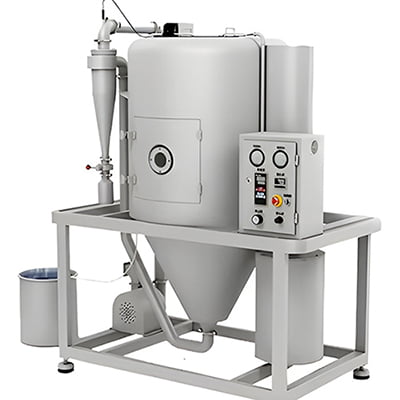
Rotary Atomizer Spray Dryer
Features a high-speed rotary atomizer for stable operation, uniform particle size, and consistent product quality.
Learn More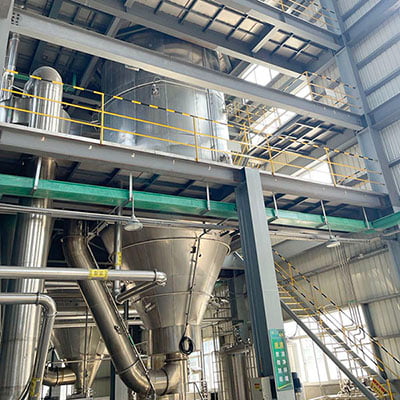
Pressure Nozzle Spray Dryer
High-pressure pump forces feed through a single-fluid nozzle. It produces coarser, denser particles.
Learn More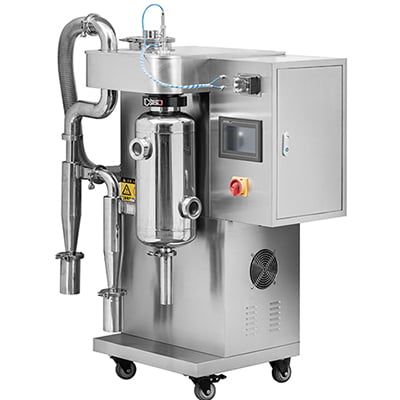
Lab Spray Dryer
A compact spray dryer designed for research, formulation development, and small-scale production.
Learn More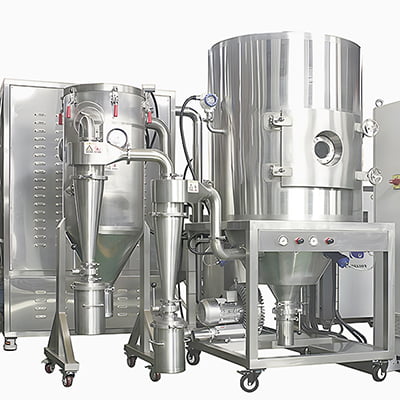
Pilot Spray Dryer
Ideal for process optimization, scale-up studies, and pilot-scale production before commercial manufacturing.
Learn More