
Overview
Vacuum Loader
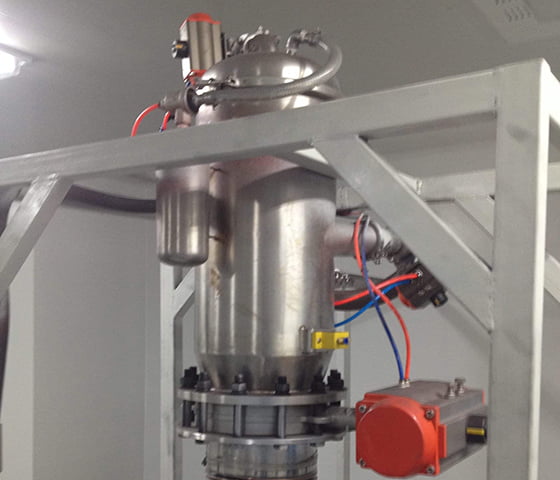
A vacuum loader is a material handling device that uses negative pressure to pneumatically convey powders or granules from a source (such as a bin or drum) to a destination (such as a mixer or hopper).
D97 <2μm
Fineness Range
GMP+
Compliant Design
360°
Process Support
Principle
How does a Vacuum Loader Work
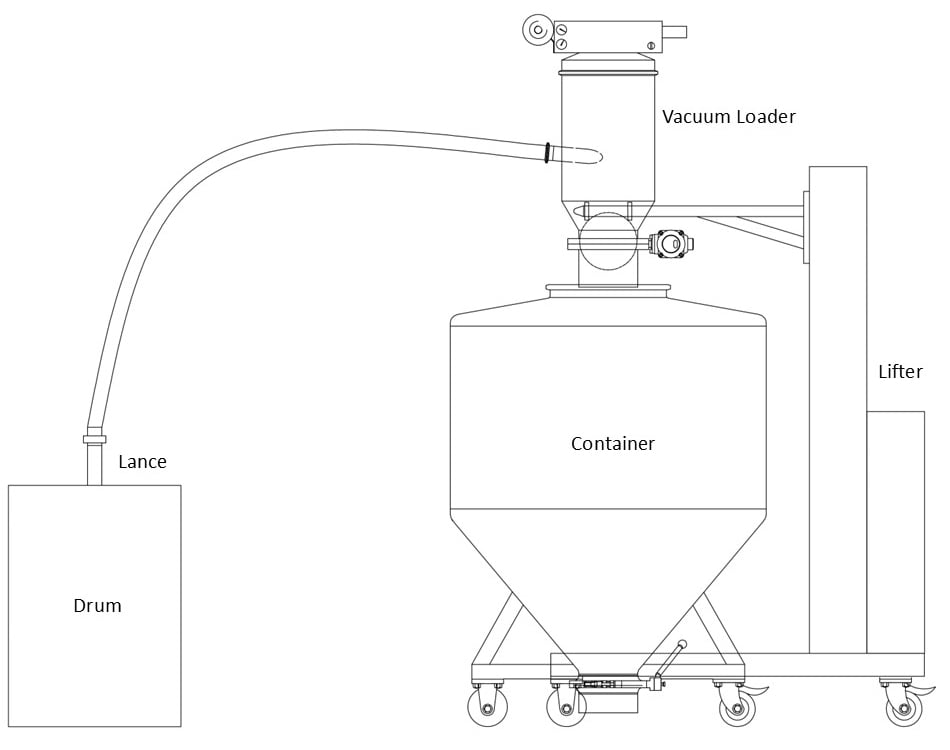
Schematic diagram of vacuum loading
Vacuum Generation
A vacuum pump starts, creating negative pressure inside the conveying line and the vacuum loader.
Material Suction
The pressure difference between the material source and the vacuum chamber causes air to flow rapidly inward, carrying material through a suction pipe.
Air-Material Separation
The mixture of air and material enters the vacuum loader. The air passes through a filter inside the receiver. The filter traps any fine dust particles, allowing only clean air to be drawn into the vacuum pump.
Discharge
Once the material reaches a preset level or timer condition, the vacuum stops, an outlet valve opens, and the material is discharged into the downstream equipment.
Features
Dust-Free Operation
Vacuum loaders transport materials through a sealed pipeline using negative pressure. Zero dust leakage helps protect the working environment and prevent cross‑contamination.
Flexible installation
The pipeline system is easily configurable and can be routed around existing equipment. This flexibility permits complex layout integration without major structural changes.
Compact Footprint
Vacuum loaders can be mounted directly on hoppers or frame stands, making them ideal for installations with limited floor space.
Gentle Material Handling
The pneumatic conveying uses air flow instead of mechanical force, which helps minimize damage to fragile or abrasive materials during transport.
Easy Maintenance
Tool-free disassembly and quick-release clamps enable rapid cleaning and component replacement, improving long-term reliability and reducing operating costs.
High Automation
Vacuum loaders automatically control feeding cycles based on material level sensors. This reduces manual operation and ensures stable, continuous material supply.
Specification
Technical Specifications
Lorem ipsum dolor sit amet, consectetur adipiscing elit, sed do eiusmod tempor incididunt ut labore et dolore magna aliqua.
| Model | Capacity | Hopper Volume | Filter Area | Construction |
|---|---|---|---|---|
| 180 | 40 - 500 L/h | 6 L | 0.45 m² | Stainless Steel 304 / 316L |
| 250 | 100 - 800 L/h | 12 L | 0.45 m² | Stainless Steel 304 / 316L |
| 320 | 500 - 2000 L/h | 22 L | 0.9 m² | Stainless Steel 304 / 316L |
| 430 | 1000 - 3000 L/h | 50 L | 1.35 m² | Stainless Steel 304 / 316L |
| 560 | 1500 - 6000 L/h | 125 L | 2.7 m² | Stainless Steel 304 / 316L |
All specifications subject to process requirements. Contact engineering for custom configurations.
Download Full Technical Datasheet
Get the complete specifications, and performance data in one document. PDF · ~2MB
Applications

Food Additive
The closed conveying system prevents dust generation and contamination, ensuring compliance with strict hygiene standards.

APIs & Excipients
Vacuum loaders handle APIs and excipients under high cleanliness standards, minimizing contamination risks and ensuring precise material transfer.

Pigments & Catalysts
Vacuum loaders help maintain a clean environment, improve material handling efficiency, and reduce contamination risks.

Pellets & Fillers
Vacuum loaders are widely used in the plastics sector to feed raw materials directly into injection molding, extruders, and blenders.
FAQ
Answers to the most common technical and commercial questions from procurement managers and process engineers evaluating vacuum loaders.
Still have questions?
Our engineers are available for a 30-minute technical consultation.
Book a ConsultationWhere does the vacuum come from?
The vacuum source for vacuum loaders typically comes from as follows:
- Vacuum pump – the most common type, driven by a motor to generate stable negative pressure.
- Venturi system – uses plant compressed air flowing through a Venturi nozzle to create vacuum.
What are the limitations on conveying distance and height?
What maintenance is required?
Are vacuum loaders suitable for continuous operation?
Related Equipment
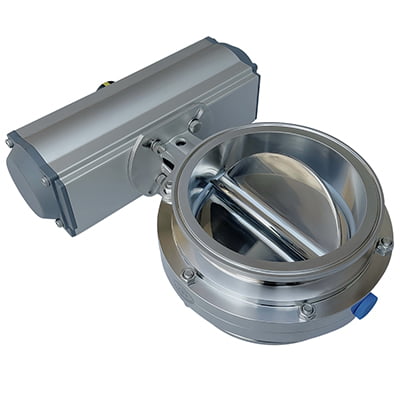
Rotary Feeder Valve
Provides controlled and metered feeding of bulk solids, helping to prevent excessive material flow.
Learn More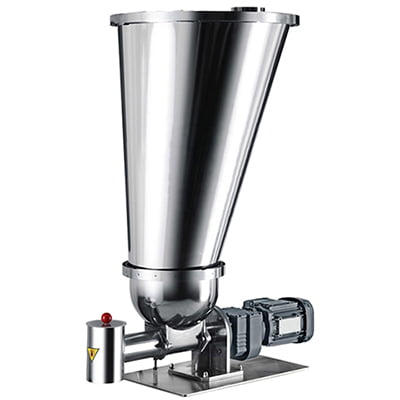
Volumetric Feeder
Delivers consistent material flow based on volume measurement, suitable for stable and simple dosing applications.
Learn More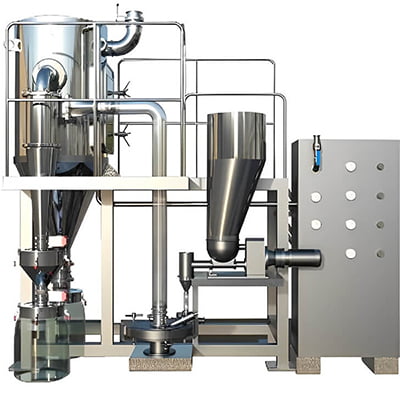
Jet Mill
Uses compressed gas to achieve ultra-fine grinding without heat, ideal for heat-sensitive and high-purity materials.
Learn More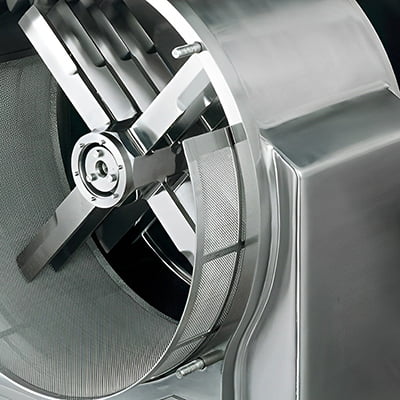
Hammer Mill
Reduces material size by high-speed rotating hammers, suitable for medium grinding of various brittle materials.
Learn More