
The Ultimate Guide to Micronization
A comprehensive technical reference for procurement directors, process engineers, and R&D specialists evaluating micronization technologies.
What Is Micronization?
A micron is a unit of length that is equal to one millionth of a meter. Micronization refers to a method in which substances are processed into very small particles, ranging in size from 0.1 to 10 microns.
Technical Definition
The International Pharmacopoeia defines micronized particles as those with a D90 ≤ 10 µm and a D50 ≤ 5 µm when measured by laser diffraction. Regulatory submissions for inhalation APIs typically require D90 < 5 µm with documented GSD (Geometric Standard Deviation) ≤ 2.0.
Why Micronize? Key Benefits
The decision to micronize is driven by measurable performance improvements across multiple dimensions.
Increased Surface Area
By reducing the particle size to the micron level, the surface area of the substance is significantly increased. This can enhance the dissolution rate, bioavailability, and overall effectiveness of pharmaceuticals and other products.
Improved Mechanical Properties
Ultrafine powders can exhibit unique mechanical properties such as increased strength, ductility, and hardness, which can be beneficial in advanced material applications.
Enhanced Optical Properties
The small size of ultrafine particles can lead to interesting optical effects, such as improved color saturation, increased light absorption, and unique light scattering properties.
Increased Chemical Reactivity
Ultrafine powders often have higher chemical reactivity due to their increased surface area, making them useful in catalysis, chemical reactions, and material synthesis.
Texture & Sensory Improvement
Micronized food ingredients (spices, cocoa, fiber) achieve smoother mouthfeel and more uniform flavor release. In cosmetics, micronized mineral sunscreens (ZnO, TiO₂) become transparent while maintaining UV protection, eliminating the white cast effect.
Overall, micronization plays a vital role in enhancing the performance, quality, and usability of a wide range of products across various industries.
Dry Grinding & Wet Grinding
Dry grinding and wet grinding are two common methods used for particle size reduction. Dry grinding reduces particle size without the use of liquids, whereas wet grinding uses a liquid medium to facilitate size reduction.
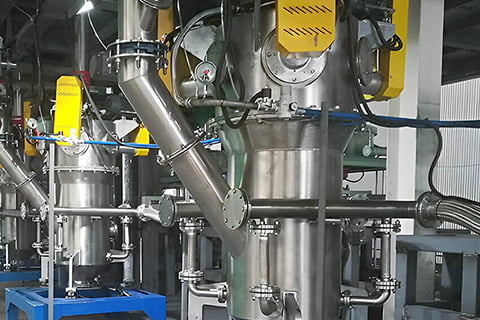
A jet mill, also known as micronizer, is a grinding equipment used in super fine particle size reduction. In a jet mill, particles are introduced into a high-speed stream of gas inside a grinding chamber. The kinetic energy in the stream of gas causes interparticle collision, and as the high-velocity particles hit against each other, they break apart, creating finer particles.
- ✓Fine particle size and uniform distribution
- ✓Suitable for heat-sensitive material
- ✓High product purity due to no mechanical wear
- ✕High compressed air / energy consumption
- ✕Require compressed air as an energy source
- ✕Lower throughput vs. mechanical mills
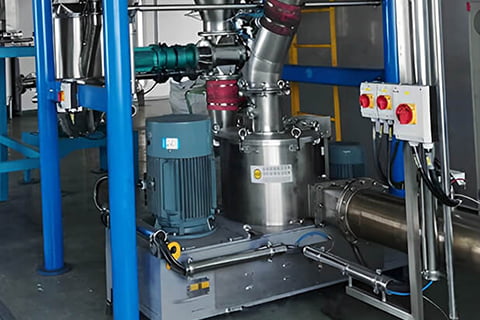
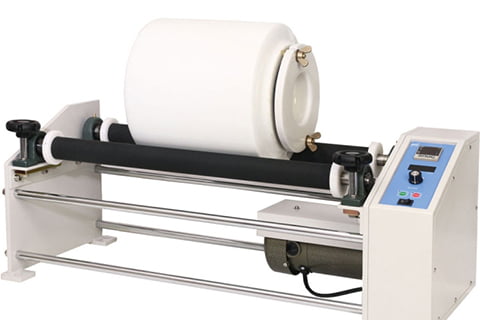
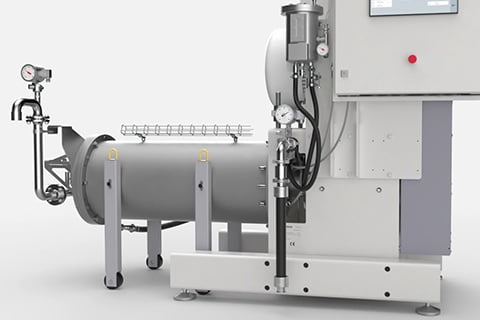
Fineness & Application Comparison
Use the table below to identify the right grinding technology based on target particle size and your industry application.
| Equipment | Particle Size Range | Typical Application Fields | Fineness Level |
|---|---|---|---|
|
Jet Mill
Dry
|
D97: 1 - 20 μm Sub-micron achievable |
Pharmaceuticals (API)
Battery Materials
Fine Chemicals
Cosmetics
Advanced Ceramics
|
|
|
Air Classifier Mill
Dry
|
D97: 20 - 150 μm Adjustable via classifier speed |
Chemicals
Agrochemicals
Pigments & Dyes
Resins & Polymers
mineral
|
|
|
Ball Mill
Dry
|
D50: 5 - 150 μm Fine achievable with long milling |
Minerals & Mining
Cement & Construction
Ceramics
Metal Powders
Fertilizers
|
|
|
Bead Mill
Wet
|
D50: 50 nm-5 μm Nano-scale capable (< 100 nm) |
Inks & Coatings
Pigment Dispersion
Battery Slurry (Li-ion)
Pharma Nanosuspension
|
|
|
Colloid Mill
Wet
|
D50: 1 - 25 μm Shear-driven emulsification |
Food Processing
Pharma Suspensions
Cosmetics & Creams
Adhesives & Sealants
Chemical Emulsions
|
|
|
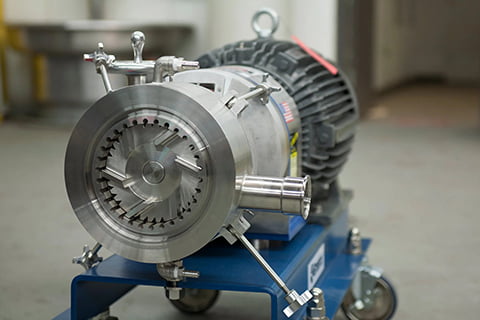
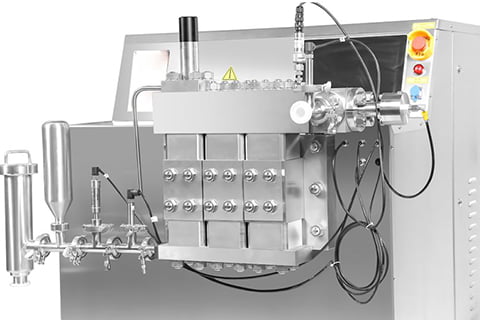
High Pressure Homogenizer
Wet
|
D50: 100nm - 2 μm Sub-micron emulsions & dispersions |
Dairy & Beverages
Pharma Nanoemulsions
Biotech & Vaccines
Cosmetic Emulsions
Specialty Chemicals
|
|
Note: Particle size ranges are indicative. Actual achievable fineness depends on material properties, feed size, and process parameters. Contact our engineers for material-specific recommendations.
Supercritical Fluid Micronization
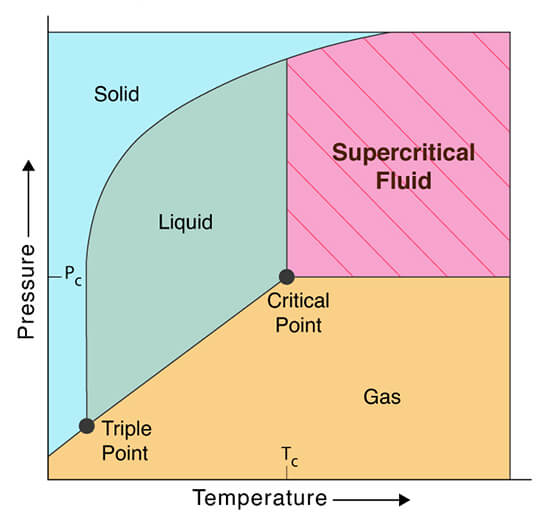
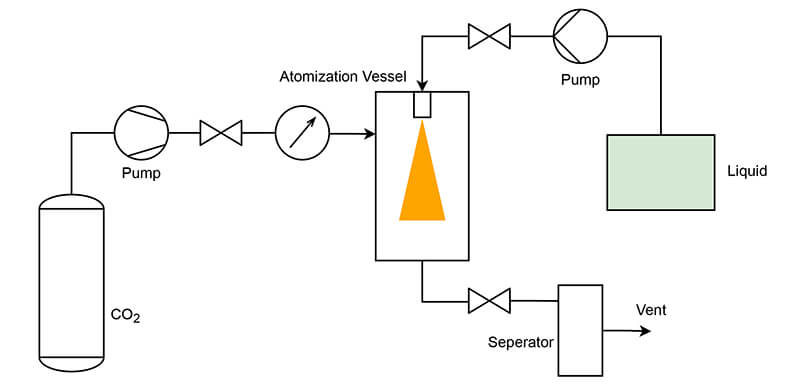
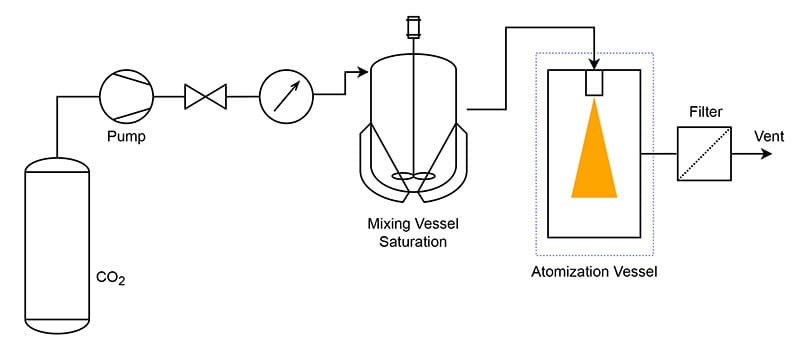
Supercritical fluid technology is an advanced micronization technique that leverages the unique properties of supercritical fluids to achieve fine particle size reduction. A supercritical fluid is a substance at a temperature and pressure above its critical point, where it exhibits properties of both liquids and gases. Carbon dioxide is the common supercritical medium due to its low critical temperature and pressure, non-toxicity, non-flammability.
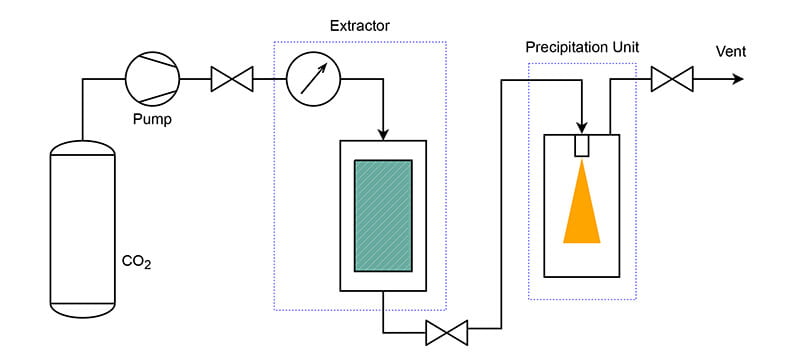
In the RESS process, organic material is dissolved in scCO₂ and then rapidly expanded through an expansion nozzle, resulting in a sudden pressure drop to atmospheric levels. This causes the dissolved substance to precipitate as fine particles. The RESS technique is effective for producing uniform and pure micronized particles, especially for thermally sensitive materials.
Choosing the Right Technology
Selecting the right micronization method depends on the material properties, target particle size, production scale, and specific application requirements. By evaluating your material characteristics, production requirements, and application needs, you can identify the optimal solution to improve efficiency, consistency, and overall product performance.