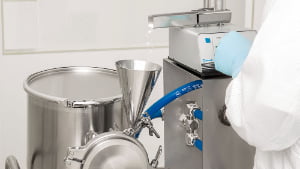
An active pharmaceutical ingredient is the material in a drug product that gives the intended therapeutic effect. We treat an API as a performance-critical material, not only a formula, because particle size, purity, stability, and process behavior can affect the final medicine.
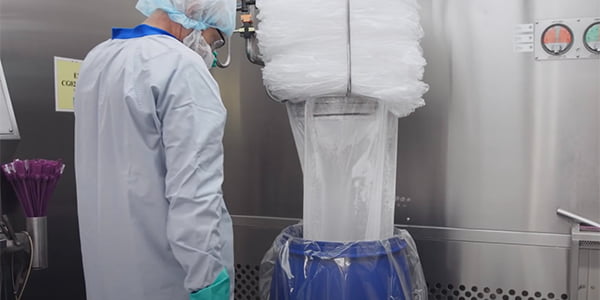
When we speak with technical engineers, we often hear the same concern. The lab result looks good, but the production line does not repeat it easily. That concern is real. API work connects chemistry, powder behavior, equipment design, cleaning, safety, and scale-up. If one part is weak, the whole project can slow down.
What Is an Active Pharmaceutical Ingredient?
Many people define an API too narrowly. That can hide real production problems. We prefer to look at the API as both a molecule and a material.
An active pharmaceutical ingredient, or API, is the substance in a medicine that produces the desired medical effect. It can be made by chemical synthesis, fermentation, extraction, or other methods. Its quality must be controlled before it becomes part of a finished dosage form.
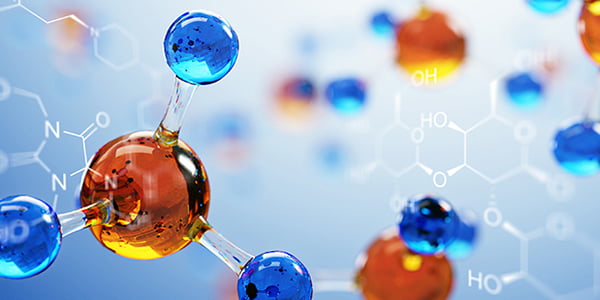
Why We Treat APIs as Performance-Critical Materials
An API is not only “what it is.” It is also “how it behaves.” Its behavior can affect mixing, flow, drying, milling, compression, capsule filling, and dissolution. For poorly soluble APIs, smaller and more controlled particles can increase surface area. That can improve dissolution rate and may improve bioavailability. But smaller particles can also create dust, static, poor flow, heat sensitivity, and cleaning issues.
| API factor | Why it matters in production | Solutions |
|---|---|---|
| Particle size | It affects dissolution, blending, and flow | Jet mill, Hammer mill |
| Purity | It affects safety and release testing | Closed handling, clean design |
| Moisture | It affects stability and flow | Dryer, dehumidified air |
| Heat sensitivity | It affects degradation risk | Low-temperature milling |
| Dust risk | It affects operator safety | Containment, dust collection |
We always ask what the API must do in the final product. That question makes equipment selection more accurate.
What Is an Intermediate?
An intermediate is a chemical substance produced during the API manufacturing process. Intermediates need further reactions or processing to be transformed into the active pharmaceutical ingredient. The FDA (U.S. Drug Administration) requires intermediates to be registered.
Main Types of APIs
Based on their source and manufacturing process, APIs can be broadly categorized into two major types: Synthetic APIs and Natural APIs.
Synthetic APIs
A synthetic API refers to a medicinal product obtained through chemical synthesis under specific and controlled reaction parameters. Representing the majority of small-molecule drugs on the market today, synthetic APIs are further subdivided into Inorganic APIs and Organic APIs.
-
Inorganic APIs are inorganic compounds that typically do not contain carbon-hydrogen bonds. They are widely utilized to regulate physical pH balances, supplement essential elements, or act as local antacids.
-
Organic APIs constitute the core of modern fine chemical pharmaceuticals. They are carbon-based molecules built through multi-step organic synthesis—such as condensation, substitution, and reduction reactions—conducted in advanced chemical reactors.
Natural APIs
Natural APIs are biologically active components derived directly from natural organisms, including microorganisms, plants, and animal tissues. Depending on their origin and extraction methodology, they are classified into Biologic APIs and Phytochemical APIs.
-
Biologic APIs are usually produced using biotechnological methods and are characterized by their complex structures and high molecular weight. The manufacturing of antibiotics is primarily based on microbial fermentation process.
-
Phytochemical APIs refer to a class of chemical substances with clear physiological activity obtained by extraction and separation from medicinal plants. Most of the phytochemicals are chemically pure substances, which can be processed as raw materials into drugs for clinical application.
Manufacturing Process of APIs
The majority of small-molecule drugs are manufactured through chemical synthesis. Broadly speaking, this highly regulated production process can be summarized into the following stages:
Preparation of Starting Materials
The journey begins with securing compliant chemical building blocks or basic chemical raw materials from audited suppliers.
- Quality & Compliance: Every batch of starting materials must be accompanied by a comprehensive Certificate of Analysis (COA) specifying its purity and impurity profile.
- Controlled Storage: Once received, these materials are maintained under strict inventory control within a GMP-compliant warehouse.
- Traceability: For Critical Starting Materials (CSMs), regulatory compliance requires full traceability stretching back to their original manufacturing synthetic route.
Core Chemical Reactions
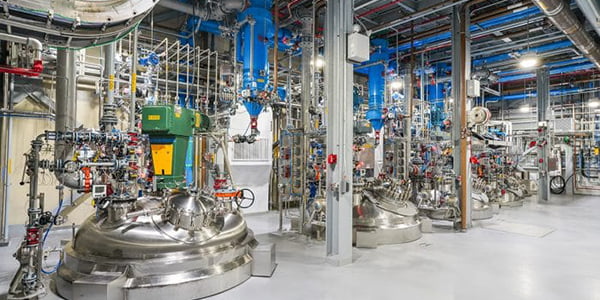
This is the cornerstone stage of API manufacturing, where the target molecular structure is built. Reactions are typically carried out in large-scale specialized reaction vessels.
- Synthesis Operations: Common organic reactions include acylation, alkylation, condensation, salt formation, hydrogenation, and more.
- Critical Process Parameters: Parameters such as temperature, pressure, pH, agitation/stirring speed, and reaction time must be monitored and controlled with extreme precision.
- Solvents and Catalysts: While essential for facilitating reactions, the majority of catalysts and solvents must be eliminated during downstream workups. Any residual amounts in the final product must strictly comply with international regulatory limits.
Separation & Isolation
Once the reaction reaches its endpoint, the crude API must be isolated from the complex reaction mixture using various physical or chemical separation techniques:
- Extraction: Separating the target molecule by exploiting solubility differentials between immiscible solvent phases.
- Distillation / Concentration: Evaporating and removing volatile solvents to concentrate the product.
- Filtration: Mechanically separating and collecting the precipitated crude solid crystals from the mother liquor.
- Chromatographic Separation: Utilized for fine purification when exceptionally high purity is mandatory. While prevalent during R&D and intermediate purification, it is less commonly used in large-scale commercial small-molecule production due to cost constraints.
Refining, Drying, and Packaging
This constitutes the final purification and physical conditioning of the API. To eliminate any risk of environmental or cross-contamination, all operations in this stage must be executed within a Grade D or Grade C cleanroom (GMP-controlled environment).
Step 1: Refining & Controlled Crystallization
The crude API is dissolved and recrystallized under precisely controlled conditions to obtain the target polymorph and crystal size, which determine dissolution rate, stability, and bioavailability.
Step 2: Washing & Drying
The crystal cake is washed and then dried under vacuum (e.g., double‑cone dryer) or in a fluidized bed until residual solvents meet regulatory limits.
Step 3: Milling & Micronization
Dried crystals are milled – typically by jet milling or hammer milling – to a uniform micron‑range particle size (1–20 µm) for optimal blend uniformity and dissolution in the final dosage form.
Step 4: Blending & Final Packaging
The milled API is blended to ensure batch homogeneity, quality‑control tested, and packed in double‑layer PE bags inside a cleanroom for distribution.
Conclusion
Active Pharmaceutical Ingredients (APIs) are the therapeutic core of every medicine, and their quality directly dictates the safety, efficacy, and reliability of the final drug product. As performance‑critical materials, APIs demand rigorous control at every stage of their lifecycle—from the selection of starting materials and intermediates to the final purification and particle engineering steps.