
The micronization of active pharmaceutical ingredients is a process used to reduce the particle size of the drug substance to the micron level, typically less than 20 microns in diameter. For specific delivery routes, such as inhaled drugs, the particle size is usually targeted at less than 7 microns to ensure the particles can be delivered deeply into the lungs.
The Purpose of Micronization of APIs
The micronization technique is commonly employed in the pharmaceutical industry for several critical reasons:
- Enhanced Solubility: Smaller particles possess a greater surface area relative to their volume, which drastically improves the solubility and dissolution rate of poorly soluble drugs. This is crucial for medications that need to be rapidly absorbed in the digestive tract.
- Improved Bioavailability: By increasing the dissolution rate, micronization enhances the bioavailability of the drug—meaning a higher percentage of the active substance successfully reaches the bloodstream to exert its therapeutic effect.
- Consistent Dosage: Micronized APIs blend more uniformly with excipients during formulation. This superior homogeneity facilitates a consistent and precise dosage in every individual tablet or capsule.
- Better Control Over Drug Release: Achieving a smaller and tightly controlled particle size helps formulators engineer the precise release profiles required for controlled or sustained-release drug delivery systems.
The micronization of APIs can be divided into dry grinding and wet grinding based on the dispersion medium. Dry grinding refers to comminution conducted in a gas environment. Wet grinding involves the comminution of raw materials in a liquid medium. APIs are generally ground in dry methods. The most popular equipment for the micronization of APIs is a jet mill which grinds drug particles into finer particles through high-speed air flow.
Example of Micronization
Rifampin is an antibiotic that is primarily used to treat bacterial infections, most notably tuberculosis and leprosy. Rifampin is available in various forms including capsules, oral suspensions, and intravenous formulations.
- Equipment used: Spiral jet mill
- Particle size before grinding: D50 = 17.70 µm, D90 = 50.20 µm
- Particle size after grinding: D50 = 1.389 µm, D90 = 2.301 µm
| Chart | D50 | D90 |
|---|---|---|
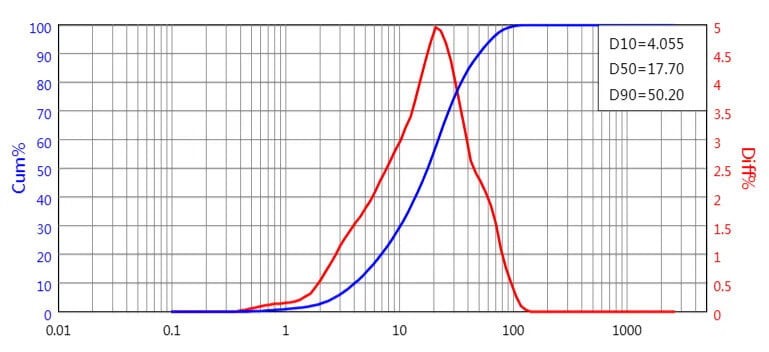 |
17.70 µm | 50.20 µm |
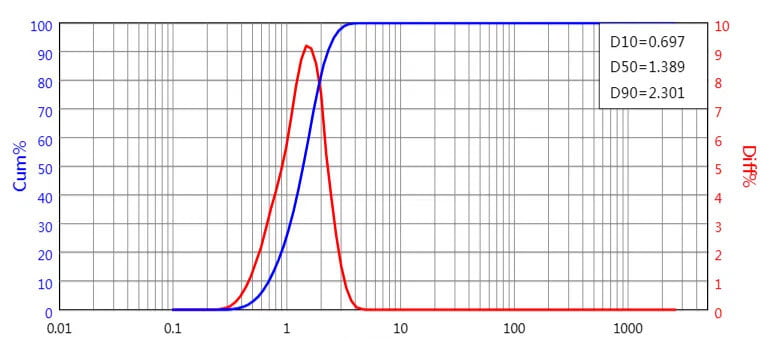 |
1.389 µm | 2.301 µm |
Critical Process Controls in API Micronization
To preserve the quality, stability, and safety of the drug substance during milling, three critical process controls must be implemented:
Temperature Control
Many APIs are highly heat-sensitive; maintaining specific temperature ranges throughout the production process is essential to prevent thermal degradation and ensure product efficacy. Additionally, equipment surfaces coming into direct contact with the APIs must be carefully monitored.
During the jet milling process, the adiabatic expansion of compressed gas leads to the Joule-Thomson cooling effect. This physical phenomenon naturally helps maintain the temperature of the entire grinding chamber between 5°C and 20°C, protecting thermolabile compounds from heat degradation.
Inert Gas Protection
Inert gas protection refers to the process of using Nitrogen or Argon to completely isolate the ambient air during the grinding, mixing, and packaging of active pharmaceutical ingredients.
The primary purposes of utilizing inert gases include:
- Humidity Control: Controlling moisture levels to maintain the physical and chemical stability of hygroscopic APIs.
- Oxidation Prevention: Preventing the oxidation and chemical degradation of sensitive APIs or reactive intermediates.
- Enhanced Safety: Effectively improving production safety when handling unstable, volatile, or explosive API dust clouds.
Containment for Highly Potent APIs (HPAPIs)
Highly Potent APIs (HPAPIs) are a class of drug substances that remain active at extremely low doses, producing significant pharmacological effects. The occupational risk of handling HPAPIs is strictly classified based on an Occupational Exposure Limit (OEL) or an Occupational Exposure Band (OEB).
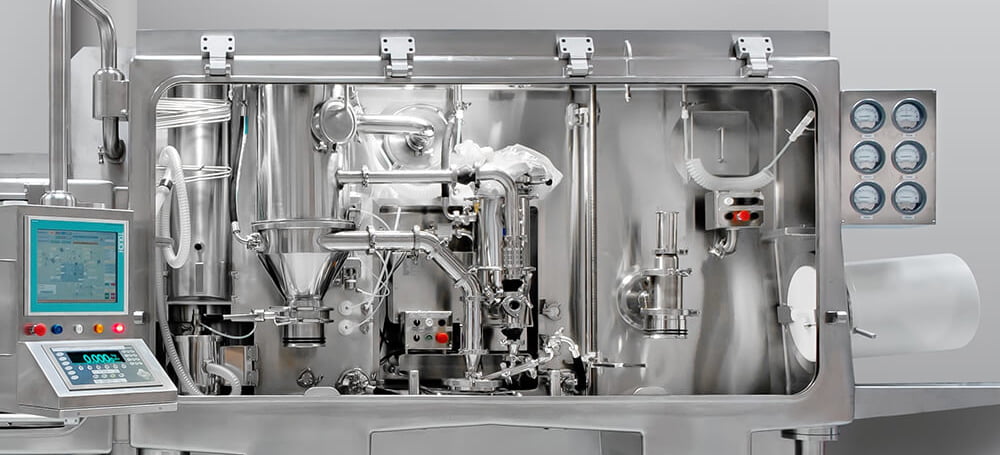
For these compounds, robust containment systems (such as isolators or glovebox systems) are critical to ensure the safety of personnel and the environment while maintaining product integrity. The precise engineering design of the containment system depends on the specific potency, toxicity, and processing volume of the HPAPI involved.